Seoul Museum of History: A Free 90-Minute Rainy-Day Route
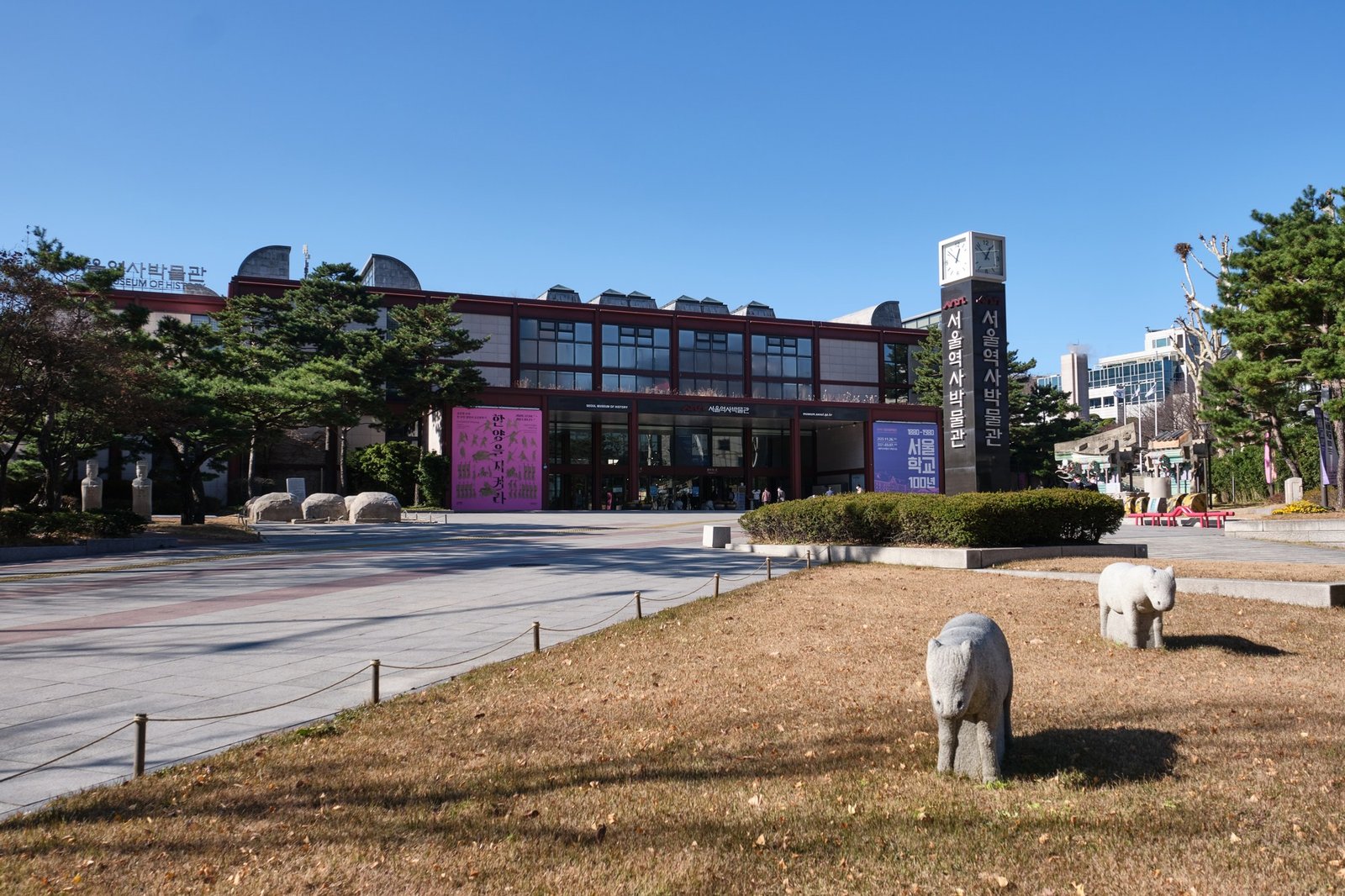
If rain interrupts a palace walk near Gwanghwamun, the Seoul Museum of History gives you a useful indoor alternative: learn how the streets outside became a capital, then see the whole city in miniature. The permanent galleries are free. A focused visit can fit into about 90 minutes without crossing Seoul or buying a ticket for a large attraction.
This is the Seoul Museum of History (서울역사박물관), 55 Saemunan-ro, Jongno-gu. It is not the National Museum of Korean Contemporary History beside Gwanghwamun Square. This guide is based on official information checked October 31, 2026, not a personal visit. The suggested timings are planning estimates, not an official guided tour.
Quick decision: is this the right museum for you?
- Choose it for: Seoul’s old street layout, ordinary city life, postwar growth and the large Seoul model.
- Allow: 90 minutes for selected highlights; longer if you want to read all four historical zones.
- Cost: free permanent exhibition. Special or separately organized exhibitions may have different admission terms.
- Rain limitation: the galleries are indoors, but the walk from the subway is outdoors. Bring an umbrella.
- Closed: Mondays and January 1. Check the museum’s notice for a specific public-holiday exception.
If you want a broad collection of Korean art and archaeology instead, use our National Museum of Korea route in Yongsan. If you are already in Anguk, the Anguk and Insadong museum route may save an unnecessary transfer.
Get to the right entrance area
Save the Korean name and 55 Saemunan-ro in your map app before leaving the station. The museum’s official subway directions list these approaches:
- Gwanghwamun, Line 5: exits 6, 7 or 8, about 470 metres. The operator estimates seven minutes; allow more for rain and crossings.
- Seodaemun, Line 5: exit 4, about 600 metres.
- Gyeongbokgung, Line 3: exit 7, about 720 metres. Staying on Line 3 may be simpler than changing trains just to reduce the final walk.
These distances start at station exits, not train platforms. They are not verified step-free routes. If you need an elevator approach, check the station map and museum assistance before travel. Our map pin marks the museum building, not a particular accessible doorway.
Opening hours: the autumn evening extension has an end date
Plan around 09:00–18:00, with normal last entry at 17:30. For the 90-minute route, aim to enter by 16:00 rather than treating the last-entry time as enough time to explore.
Temporary schedule, September 15–November 30, 2026: Tuesday, Wednesday, Friday, Saturday and Sunday opening is extended to 21:00, with last entry at 20:30. Thursday is not included. This comes from the dated Seoul city announcement and the updated VisitSeoul listing.
The museum’s general English visitor-information page still shows Friday 22:00, which differs from the dated autumn schedule. Use the dated autumn notice for this period and recheck before an evening visit, especially after November 30. The extension applies to the museum, not the neighboring palace.
A focused 90-minute route inside
The permanent galleries and City Model Hall are on the third floor. Start with the current floor map at the entrance; temporary room restrictions can change the order.
- First 10 minutes: get oriented. Find the route upstairs, toilets and any current notices. The museum lists first-floor lockers for bags and packages. Check their size and availability rather than assuming a large suitcase will fit.
- Next 25 minutes: Zone 1, the Joseon capital. Focus on how palaces, walls, markets and residential neighborhoods fitted together in Hanyang. This gives context to places you may already have visited, instead of turning the stop into a list of dates.
- Next 30 minutes: Zone 4, Seoul after liberation. Look at rebuilding, everyday life and the development of Gangnam. The contrast between the old capital and the expanding modern city is the point of this short route.
- Final 25 minutes: the City Model Hall. Follow the Han River through the model, find the historic centre, then look towards the districts on the other side of the river. Compare it with the map on your phone to place your next destination.
This highlights route intentionally skips a detailed reading of Zones 2 and 3, covering the open-port/Korean Empire era and colonial Seoul. If those periods interest you, add time for them or replace one of the longer stops. For only an hour, choose Zone 1 or Zone 4, plus the model; leave the outdoor palace for another day.
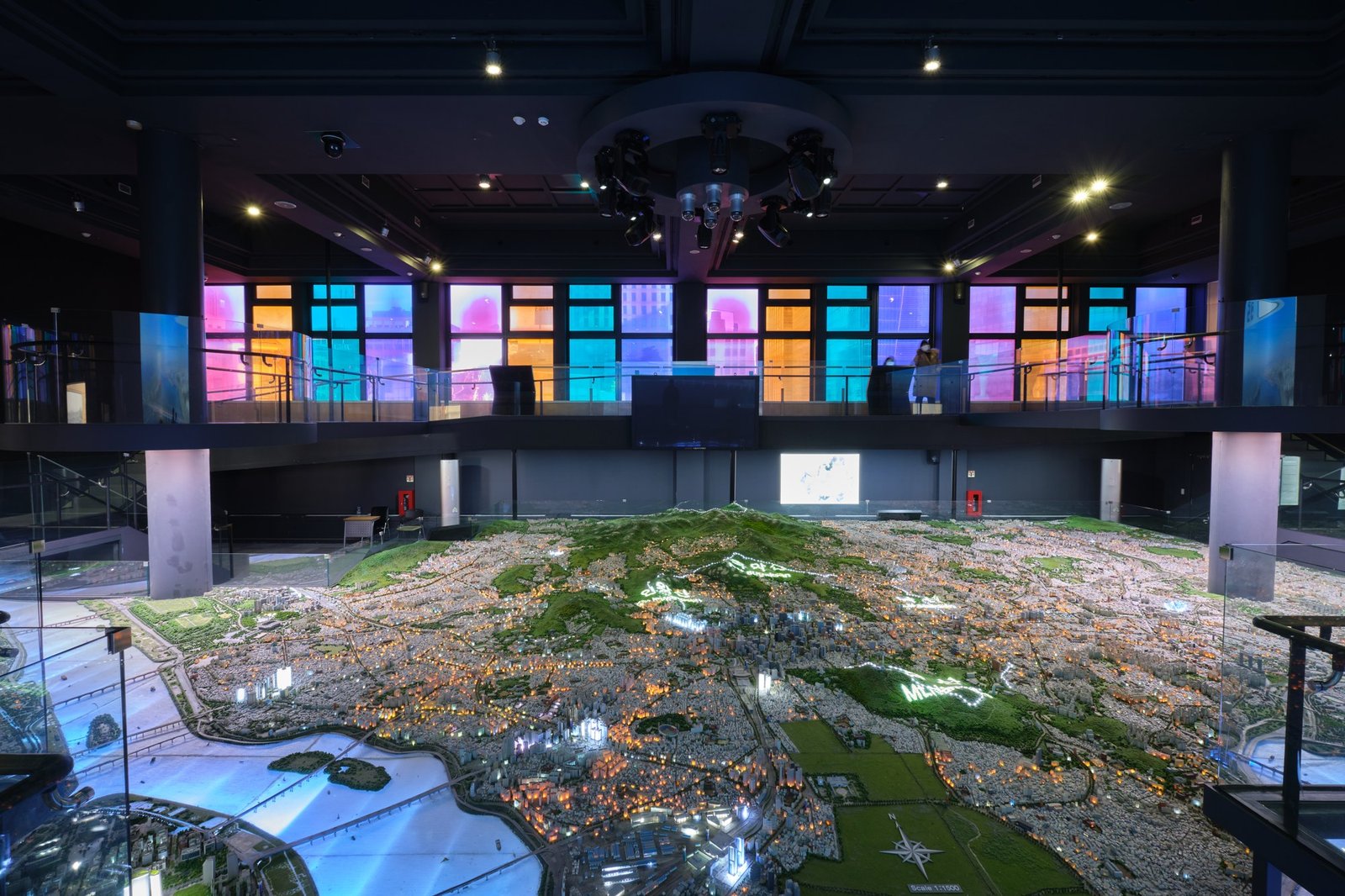
The museum’s dedicated model description gives a scale of 1:1,500. It is a way to understand Seoul’s geography, not a live map of every new building. Multimedia presentations may vary; this route does not depend on a particular show time.
English audio, bags and a simple budget
The official mobile exhibition guide explains how to scan QR codes beside third-floor permanent exhibits for audio in English, Korean, Chinese or Japanese. Bring your phone and headphones. This does not mean every temporary display has a full English translation or that a live English tour will be available when you arrive.
The visitor-information page also lists wheelchairs and strollers. Ask the desk about availability. Locker dimensions and availability were not verified, so leave bulky luggage at your accommodation or another suitable storage service if it would make the visit difficult.
- Essential exhibition budget: ₩0 for the permanent galleries.
- Keep separate: transport, food, drinks and any optional paid exhibition.
- No program dependency: this self-directed plan does not rely on a guided tour, workshop or children’s program. Check separate booking terms if you add one.
If the rain stops: add Gyeonghuigung, not another indoor transfer
Neighboring Gyeonghuigung Palace is an optional outdoor stop. Its official address is 45 Saemunan-ro; admission is free and hours are 09:00–18:00, with Monday and January 1 closures. The reconstructed palace buildings give another perspective on the city’s history.
Allow an extra 20–30 minutes if the weather, daylight and your energy suit a short look around. Skip it in steady rain. Do not stay in the museum until evening and expect the palace to share the 21:00 closing time. If the palace matters to you, visit it before the late museum session.
For a dry-weather continuation, our Gwanghwamun Square guide covers the surrounding district. On a genuinely wet day, the better plan is often to finish one museum comfortably and return to the station, rather than force an outdoor checklist.
Information and source checks: October 31, 2026. Hours, holiday exceptions, special exhibitions and room access can change. Route durations are editorial estimates. Photographs in this guide are archival and credited with their recorded dates; they are not evidence of today’s weather, crowds or access conditions.