National Museum of Korea: A Two-Hour Route, Tickets & Rainy-Day Tips
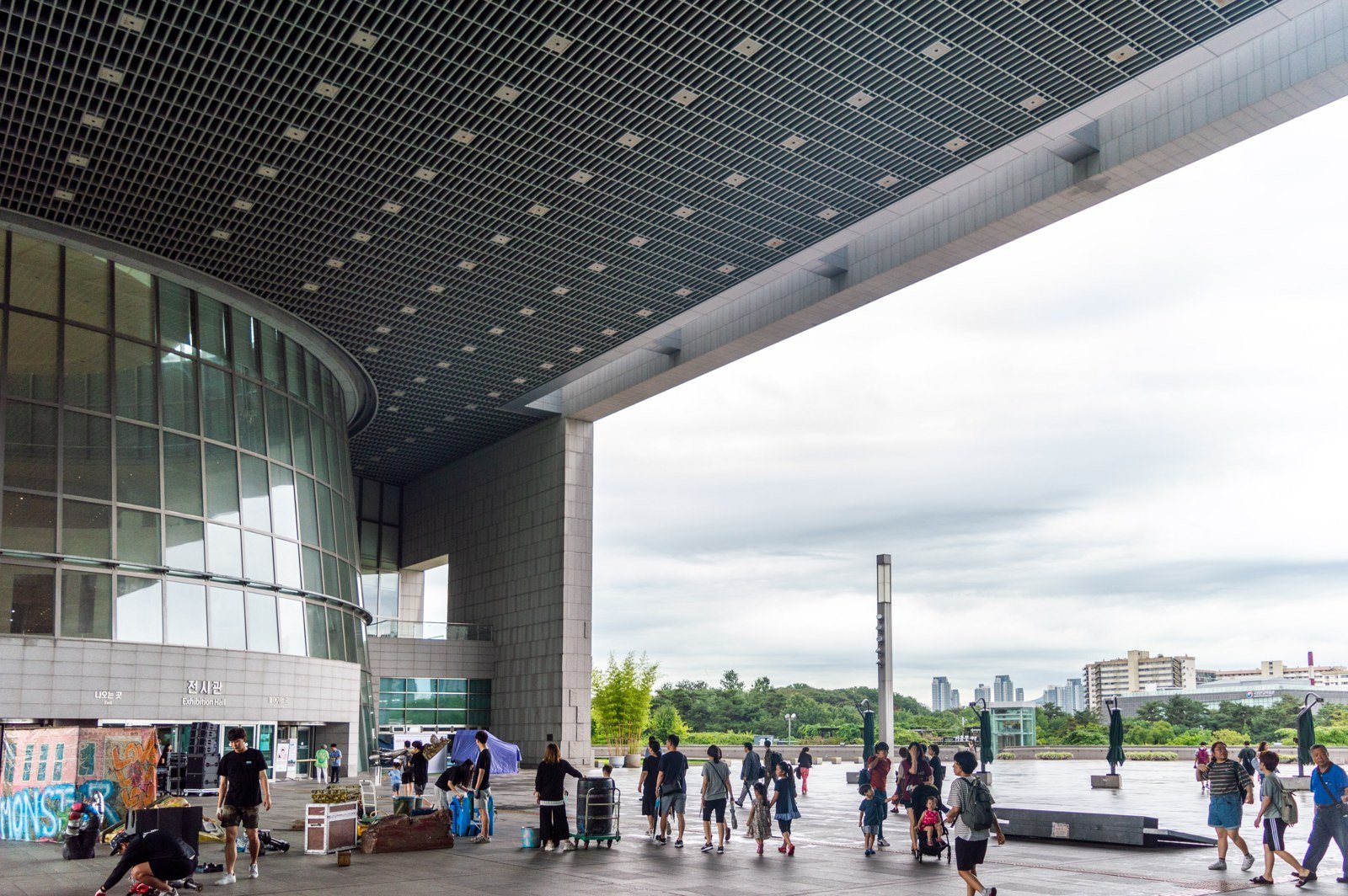
Exterior, 31 July 2019. Photo by Tristan Surtel / Wikimedia Commons, CC BY-SA 4.0. Resized, not cropped; the resized photograph remains under the same CC BY-SA 4.0 licence. This historical image is not evidence of current access arrangements.
A museum afternoon in Seoul does not have to mean trying to see every room. The National Museum of Korea works especially well when you choose a small route: one history section, the Room of Quiet Contemplation, and Korean ceramics. Permanent-gallery admission is free, but several galleries are temporarily closed, so an older highlights list can send you to the wrong place.
Information checked: 21 October 2026 (Korea time). This is a source-researched planning guide, not a report of a personal visit. The two-hour schedule below is our suggested allocation, not an official guided tour.
Decide quickly: is this the right museum for your day?
- Choose it for: Korean history and art, a low-cost indoor afternoon, or a visit that can be shortened without wasting a paid ticket.
- Allow about two hours inside, plus your journey. You can see a focused selection, not the whole collection.
- Choose a different plan if: your main purpose is a temporarily closed gallery, or you want to stay around the palaces rather than travel to Yongsan. Our Anguk and Insadong rainy-day route is a more geographically compact alternative for that area.
Hours, entry costs and reservations
- Monday, Tuesday, Thursday, Friday and Sunday: 9:30 am–5:30 pm; last admission 5:00 pm.
- Wednesday and Saturday: 9:30 am–9:00 pm; last admission 8:30 pm.
- Permanent galleries: free admission. Paid special exhibitions have separate conditions; this route does not require buying one.
- Children’s Museum: a separate timed-reservation visit. Do not assume that arriving for the main museum secures a children’s session.
Exit guidance begins ten minutes before closing. The museum closes on January 1, Lunar New Year’s Day and Chuseok. Permanent and special galleries also have quarterly closure days; the next date under that rule in 2026 is Monday, December 7. Check your date rather than assuming every Monday is closed. Older references to a 10:00 am opening are outdated: the museum changed its regular opening time in March 2026. Sources: official visitor information, checked 21 October 2026.
Budget decision: this permanent-gallery route has an admission cost of ₩0. Transport, food, shopping and any optional special exhibition are extra. Rather than reserving a paid exhibition just to fill the afternoon, first decide whether its subject matters more to you than the free galleries.
Important: gallery closures through January 2027
The museum’s current gallery notice lists the following closures through 28 January 2027, with reopening planned for January 29:
- Third floor: Buddhist Sculpture (301), Metal Crafts (302) and the Room of Sense.
- Second floor: Buddhist Painting (203), Wood and Lacquer Crafts (204), and Painting rooms 202-3 and 202-4.
The notice says Painting rooms 202-1/202-2 and the ceramics galleries, Celadon (303) and Buncheong Ware and White Porcelain (304), remain open. The Room of Sense is not the Room of Quiet Contemplation. The latter is a different second-floor space and is part of the route below. Check the official permanent-gallery notice before leaving, especially if one collection is your main reason to visit.
Getting there: Ichon Station, not Yongsan Station
For the museum’s published subway approach, use Ichon Station (이촌역), served by Line 4 and the Gyeongui–Jungang Line. This is a different station from Yongsan Station. If you are new to transfers, see our Seoul subway guide before starting.
- At Ichon, follow museum signs. The official directions identify Exit 2 and a 150-metre walk toward Yongsan Family Park. That figure is not a promise of a 150-metre platform-to-gallery journey.
- For the underground approach, look for Museum Nadeulgil. The museum lists passage hours of 7:00 am–11:00 pm. Passage hours are not exhibition opening hours.
- If you need a lift, the official station directions point toward exits 1 and 2. Follow the accessible signs rather than taking the first staircase.
- Allow extra arrival time for finding the entrance, belongings and any screening or queue. Keep an umbrella available; do not treat the whole journey as guaranteed weatherproof.
Destination to save: National Museum of Korea / 국립중앙박물관, 137 Seobinggo-ro, Yongsan-gu, Seoul. Source: official directions, checked 21 October 2026. For time-sensitive access questions, the museum lists +82-2-2077-9046 for Korean/English enquiries.
A manageable two-hour route
These time blocks total two hours inside the museum. They are planning choices, not measured walking times or guaranteed queue lengths. Pick a starting time that leaves the full visit before closing; last admission is too late for this route.
0:00–0:15: arrive and choose your priority
Take an English floor map if available and confirm the day’s closures with the information desk. Decide which stop you would least mind dropping. If you are already tired, skip the history section and keep the art-focused route rather than rushing three floors.
0:15–0:50: one first-floor history section
Choose a section within the Prehistory and Ancient History or Medieval and Early Modern History galleries. Do not try to read every label along an entire floor. A useful approach is to select three objects, read their dates and uses, then compare what changed across them. This gives the visit a story without turning it into a checklist.
0:50–1:10: Room of Quiet Contemplation
Go to the second-floor space displaying two pensive bodhisattvas. Give yourself time to look rather than treating it as a quick photograph stop. If access is busy, reduce the next stop or omit this room instead of letting a queue consume your remaining afternoon. See the museum’s room introduction.
1:10–1:40: ceramics on the third floor
Head for rooms 303 and 304, not the closed Buddhist Sculpture and Metal Crafts galleries. Compare celadon with buncheong ware and white porcelain: focus on colour, surface decoration and shape rather than trying to memorize names. Two contrasting objects can be more memorable than a rapid circuit of every case.
1:40–2:00: your buffer, not another compulsory stop
Use the final twenty minutes for a missed room, a rest, the shop or leaving without a hurry. If the weather is pleasant, you can decide separately whether to spend more time outside. In heavy rain, keep the museum as the main activity rather than adding an outdoor walk simply because it appears on a map.
Adjust the plan for children, luggage or a late start
- With children: choose one gallery theme and a shorter visit. A Children’s Museum reservation is a separate plan, not an automatic add-on to this two-hour route.
- With a suitcase: the museum lists storage facilities, but that does not establish availability or fit for your particular bag. Store large luggage before committing to the museum; our Seoul Station luggage-storage comparison can help if your journey starts there.
- With mobility needs: use the lift-oriented station approach and ask staff for the easiest route between your selected rooms. Reduce the number of floors rather than assuming all two-hour itineraries involve the same effort.
- Starting late: on a normal closing day, pick two stops instead of racing the whole route. Wednesday or Saturday’s later closing offers more flexibility, but does not guarantee a quiet museum.
Before you leave your hotel
Check today’s hours and closure notice, save Ichon Station and the museum’s Korean name, and decide whether you want the free permanent galleries or a particular paid exhibition. Bring only what you are comfortable carrying if storage is full. Follow the rules and photography signs in each room; a historic exterior photograph in this guide is not permission for commercial photography inside the museum.
Editorial note: operating information and gallery status were checked against official museum sources on 21 October 2026. Exhibitions, access and reservations can change. No firsthand visit, purchase or queue-time test is claimed.