How to Ride Seoul Buses: How to Check the Right Stop, Direction and Arrival Time
Taking a Seoul bus for the first time is usually not difficult because of the fare. The stressful part is knowing whether you are at the right stop, on the right side of the road and waiting for the right bus.
The practical rule: use a map or transit app to plan the route, then confirm the exact stop and check its live arrival list before you wait. If a stop has an electronic arrival board, find your bus number in the list and read the estimated arrival time beside it.
How to Ride Seoul Buses: The 60-Second Version
- Use a map or transit app to choose a route.
- Open the exact boarding stop, not just the route line or street name.
- Check live arrivals at that stop. On an electronic board, find your bus number and its arrival time.
- When the bus arrives, confirm both the number and the direction on the front display.
- Tap a transit card when you board and again when you get off, track your stop in the app, and press the stop button one stop before your destination.
The Three Checks That Prevent Most Mistakes
1. Check the route, not just the bus number
A bus number alone does not prove that the bus is going toward your destination. Before leaving your hotel, check the route result in your app: the boarding stop, the alighting stop and the direction should make sense together.
If your destination is a small street, use a bigger landmark as a second check. A nearby subway station, market, palace or major intersection is easier to recognize than an address on a bus display.
2. Check the exact stop, not just the street
On a large Seoul road, stops on opposite sides usually serve opposite directions. There can also be several nearby stops with similar names. A route can look correct on a map while you are standing at the wrong stop or on the wrong side of the road.
Open the stop itself in your app and compare its live-arrival list with the route you planned. Do not rely only on a line passing near you on a map.
3. Check live arrivals before you wait
This is the check that solves the question I hear most often from accommodation guests in central Seoul: “The app says bus 502 stops here, but I have waited and cannot see it. Am I at the right stop, and is this the right direction?”
Here is the first thing I tell them: check the live arrival list at the stop, not only the route number in the app. If there is an electronic arrival board, find your bus number in the list, then look at the estimated arrival time on the right. If your number is not listed, do not keep waiting blindly. Recheck the exact stop, the side of the road and the route direction first.
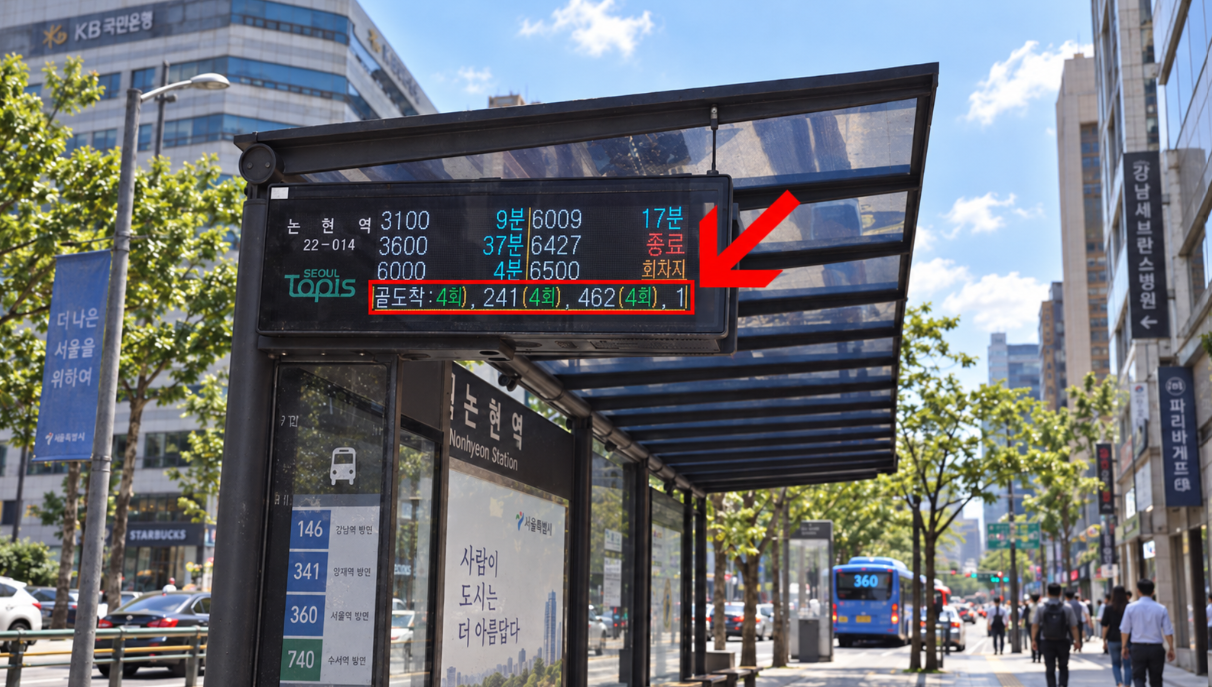
Not every stop has the same kind of electronic board. When there is no board, open the exact stop in a map or transit app and use its live-arrival list instead. Arrival times are estimates, so traffic and signals can change them, but the list is much more useful than waiting only because a route number appeared in a search result.
When the Bus Arrives
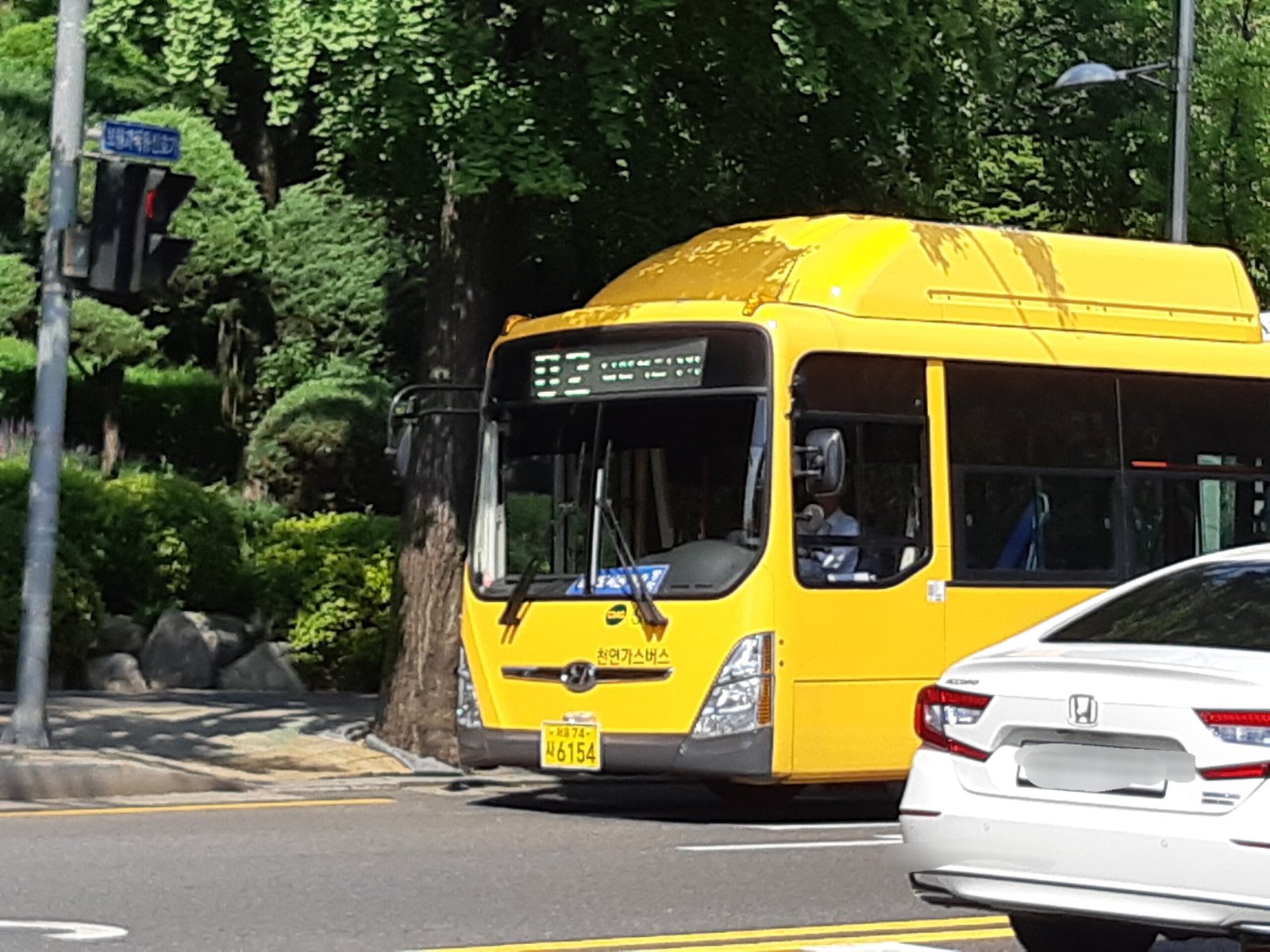
Before boarding, look at the front display one more time. Confirm the bus number and its displayed destination or direction. In normal city-bus use, passengers board at the front and leave through the rear; follow the flow of passengers and the driver’s instructions if the stop is busy.
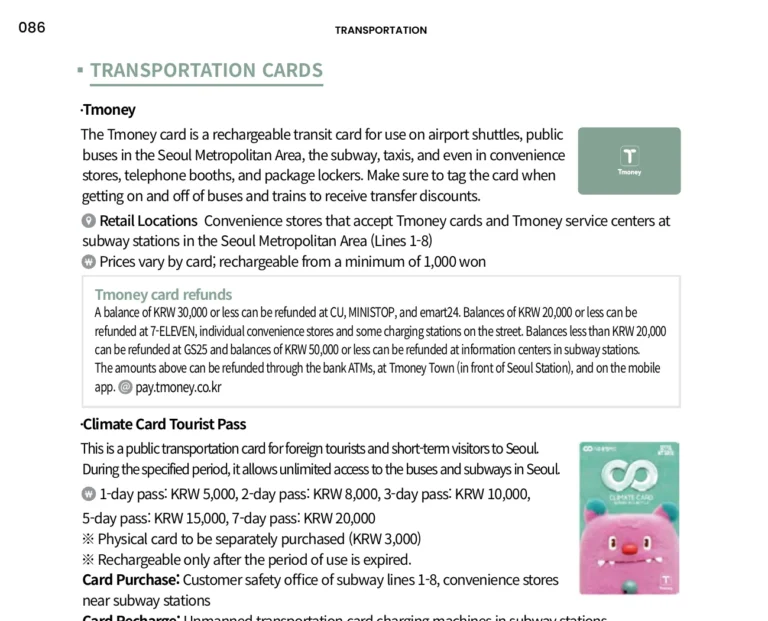
A reloadable transit card is the simplest payment method for visitors. Tap when boarding and again when getting off; this preserves transfer discounts and lets the fare system calculate the trip correctly. Climate Card users should not skip the exit tap either: two missed exit taps can temporarily suspend card use for 24 hours. Coverage depends on the card and bus service, so check current eligibility before relying on it for a particular trip.
Getting Off Without Missing Your Stop
Keep your map or transit app open while you ride. Watch the next-stop list rather than waiting until you recognize the final stop by sight. Press the red stop button about one stop before your destination, then move toward the exit only when practical.
You do not need Korean for this routine. Saving the Korean name of your destination or stop as a screenshot can still help if you need to show it to someone.
If You Cannot Find Your Bus—or You Took the Wrong One
- Your bus number is not on the arrival list: Check the exact stop, the side of the road and whether the app selected a nearby stop with a similar name.
- The next bus is too far away: Compare the next arrival with a subway or taxi route. The fastest theoretical route is not always the easiest choice for a visitor.
- You boarded the wrong bus: Get off at the next safe stop, then reroute in your app. In central Seoul, this is usually an inconvenience, not a ruined day.
- You missed your stop: Get off at the next stop and reroute. Do not try to get off between stops or panic about reversing the whole journey.
When I Would Take a Bus Instead of the Subway
| Choose a bus when… | Choose the subway when… |
|---|---|
| You have a direct cross-town route. | You need the most predictable journey time during rush hour. |
| Your destination is uphill or far from a subway station. | You have a time-critical appointment. |
| The subway option needs several transfers. | It is your first day and the bus route feels unnecessarily complicated. |
| You want to see everyday Seoul above ground. | You have very large luggage or a taxi would be simpler. |
For a first-time visitor, a direct bus can be much easier than two subway transfers. But if you are already uncertain about the stop or direction, the subway may be the calmer choice.
For a step-by-step alternative, see our Seoul subway guide for first-time visitors.
Bus Colors in One Minute
- Blue buses: major routes across Seoul.
- Green buses: neighborhood and feeder routes, often connecting to subway stations.
- Yellow buses: shorter circular routes in central Seoul.
- Red buses: express or commuter services for the wider metropolitan area.
Color is only a first clue. Your real decision should be based on the route, the exact stop and the live arrival list.
FAQ
The app says my bus stops here, but it is not on the arrival board. What should I do?
Do not keep waiting just because the route number appeared in a search. Check that you opened the exact stop, confirm you are on the correct side of the road, and look for a nearby stop with a similar name. If the number is still absent, rerun the route from your current location.
How do I know I am waiting on the right side of the road?
Open the exact stop in your app and compare the listed buses and direction with your planned route. On wide roads, the stop across the street may serve the reverse direction even when it is only a short walk away.
Do I need Korean to take a Seoul bus?
No. A map or transit app, the bus number and the live arrival list are enough for most trips. Save a Korean stop name as a screenshot if you want a backup.
What if I get on the wrong bus?
Get off at the next safe stop and reroute. It is a common first-time mistake, and central Seoul usually gives you several recovery options.
Should a first-time visitor take a bus or subway?
Take a direct bus when it clearly avoids multiple subway transfers. Choose the subway when the schedule matters, traffic is heavy or you do not feel confident about the bus stop and direction.