Seoul City Tour Bus Guide: Tiger Bus vs. Seoul Tram
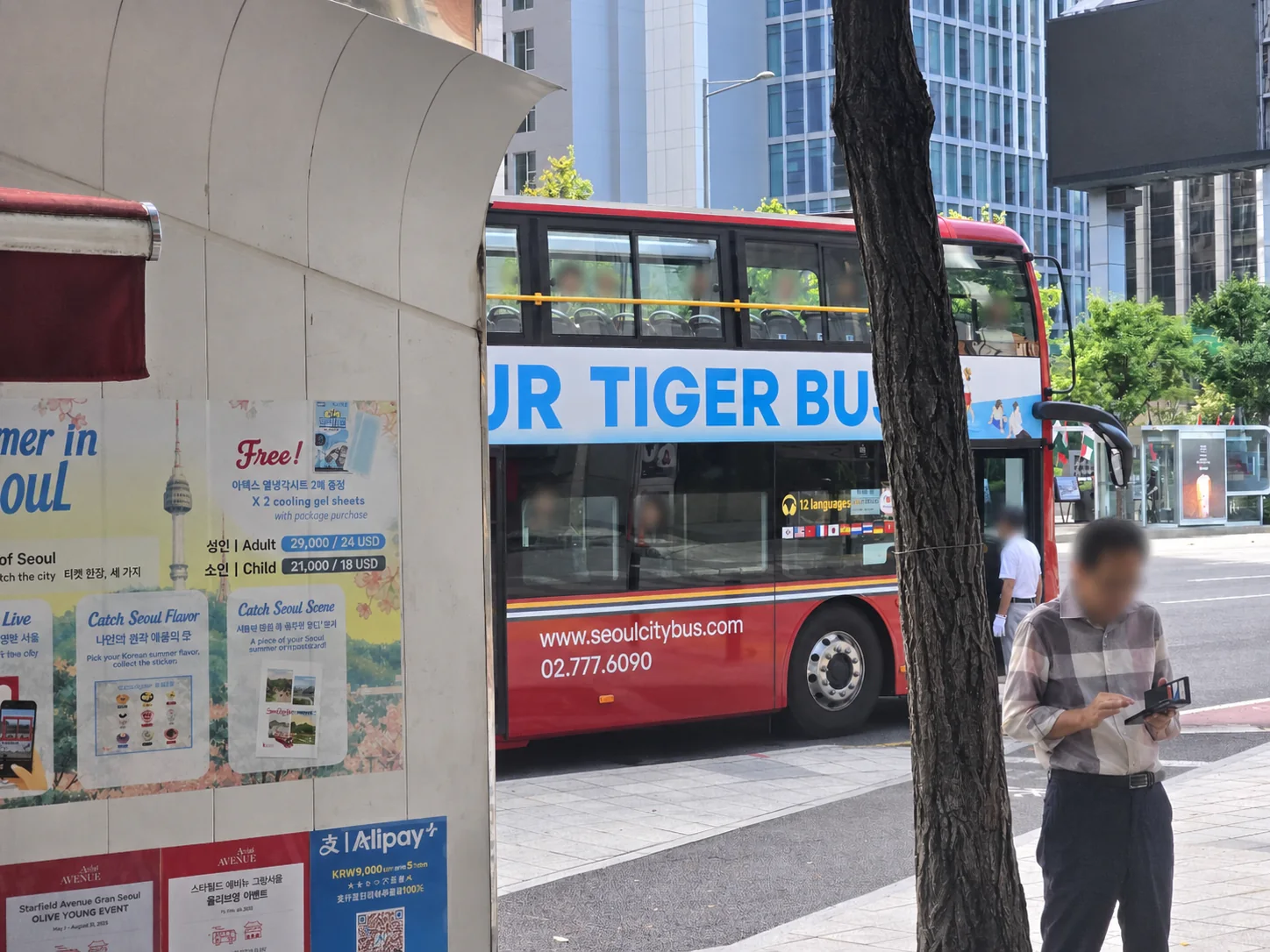
Quick answer: The Seoul City Tour Bus is the easier choice if you want to cover major sights with less walking. The red Tiger Bus day course lets you get off and reboard at central Seoul stops, while its night course is a continuous sightseeing ride rather than a hop-on, hop-off service. Seoul Tram is something different: a small, guided, pedal-assisted group experience—not a rail tram or public transportation.
I saw both vehicles around Gwanghwamun, and I can understand why first-time visitors confuse them. The big red double-decker looks like a practical sightseeing bus. The smaller green-and-white Seoul Tram looks like a party table moving through traffic. They can both show you central Seoul, but the experience, price, and way you use them are very different.
Seoul City Tour Bus vs. Seoul Tram at a Glance
| Feature | Tiger Bus | Seoul Tram |
|---|---|---|
| What it is | Large sightseeing bus | Small guided pedal-assisted vehicle |
| Best for | First-time visitors, major sights, less walking | Friends or groups wanting an interactive activity |
| Can you hop off? | Yes on the main daytime course; no on the night tour | No; follow the booked guided route |
| Main area | Central Seoul, palaces, Namsan, Myeongdong and more | Seasonal central-Seoul routes around historic districts |
| Starting point | Gwanghwamun ticket booth for the Tiger Bus routes described here | Meeting point depends on the booked product |
| Weather impact | Traffic and open-top seating can be affected | May be changed or cancelled in unsafe weather |
What Is the Seoul City Tour Bus?
“Seoul City Tour Bus” is a general name, not one single ticket system. More than one operator runs sightseeing buses in Seoul. The bus in my photos is the red Tiger Bus, operated through SeoulCityBus.com. You may also see a blue bus from a different operator. Routes, stops, schedules, and tickets are separate, so check the operator name before buying or boarding.
For many first-time visitors, the Tiger Bus is useful because it links famous places without requiring a complicated subway plan. The main daytime route connects sights such as N Seoul Tower, Myeongdong, Namsangol Hanok Village, Changdeokgung, Insadong, the Blue House area, and Gyeongbokgung. A complete loop takes roughly 90 minutes when traffic is normal, but the real value is being able to leave the bus, explore, and join a later vehicle on the same daytime course.
Tiger Bus Courses: Day and Night Work Differently
Downtown, Palaces & Namsan Course
This is the practical hop-on, hop-off option. The official route currently lists 15 stops across central Seoul. You can use it as a moving overview of the city or get off at selected places and continue later. If your trip is short, I would not try to stop everywhere. Choose two or three areas and leave enough time to return before the final bus.
A good first-day plan is Gwanghwamun, a palace area, Insadong, and Namsan or Myeongdong. If you are still deciding which royal site deserves your time, read my practical comparison of Seoul palaces before choosing your stops.
Han River & Namsan Night Tour
The night tour is not a hop-on, hop-off route. It is a continuous ride of about 90 minutes, with a scheduled photo break near N Seoul Tower listed by the operator. This works better for travelers who want city lights without planning individual stops. Bring an extra layer even in warm seasons: wind on an open upper deck can feel cooler after sunset.
Tickets, Prices, and the Gwanghwamun Booth
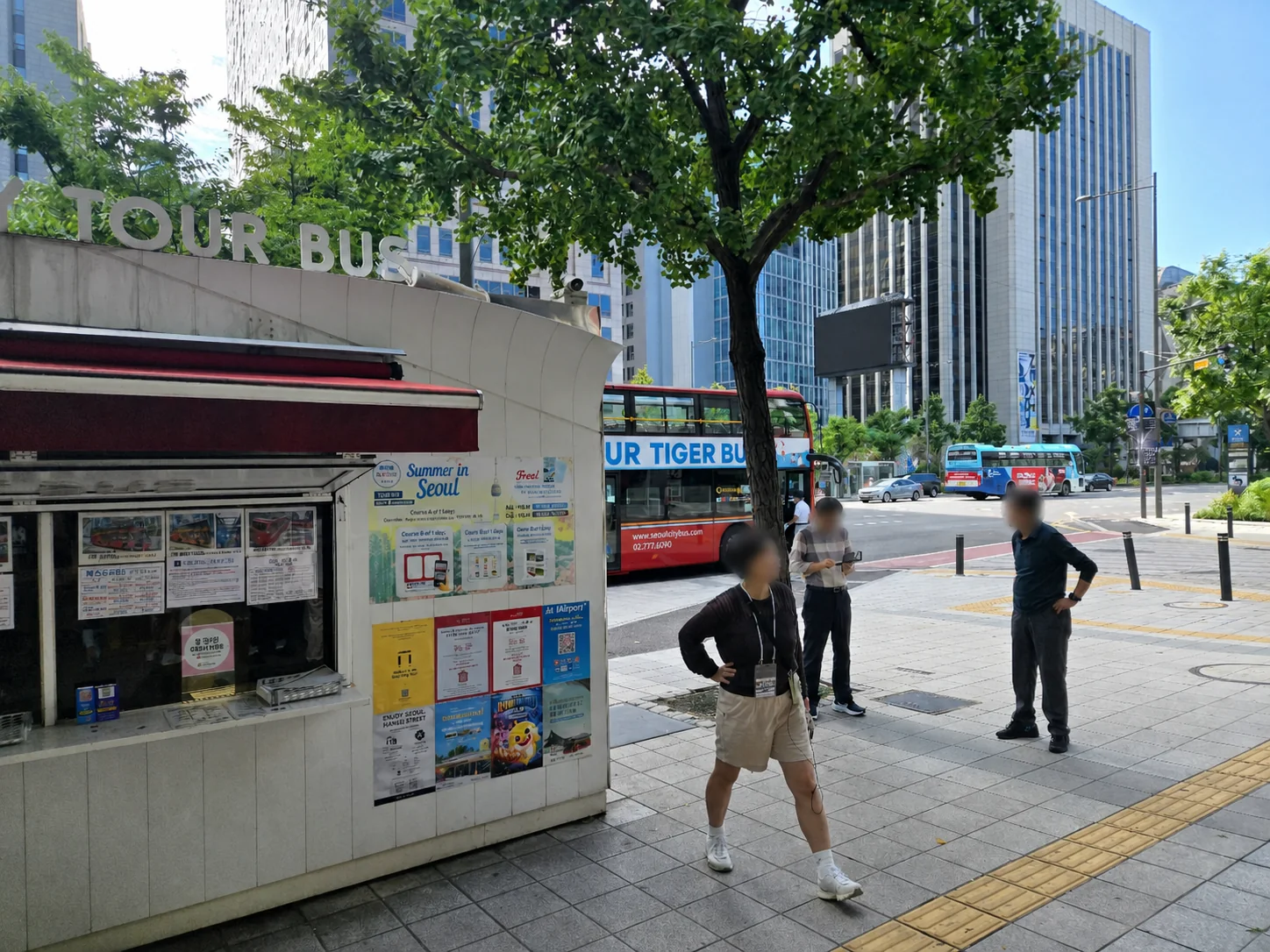
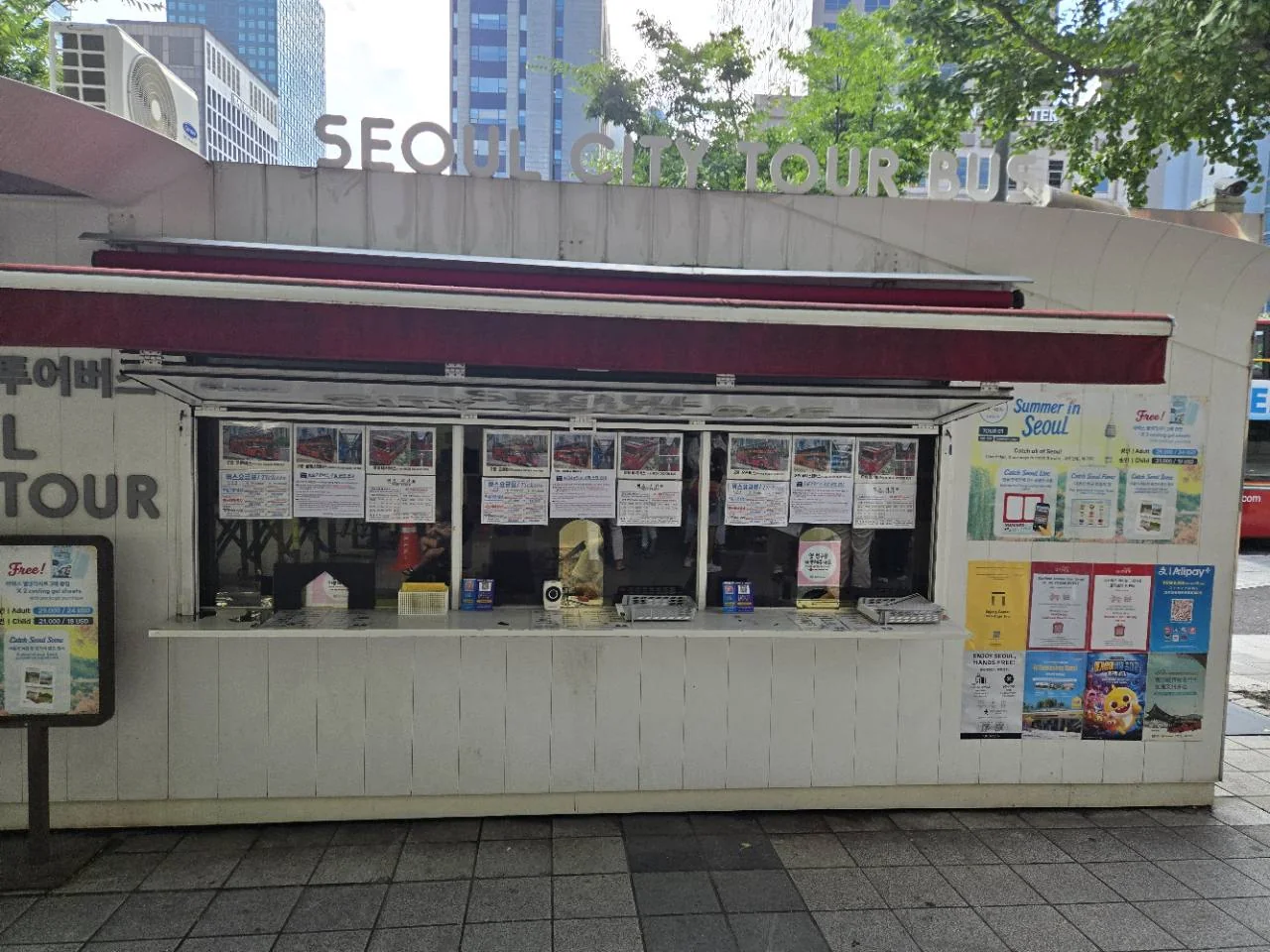
The Tiger Bus ticket booth is beside the Koreana Hotel area, near Gwanghwamun Station Exit 6. The operator’s current home page lists the booth at 68-2 Taepyeong-ro 1-ga and telephone 02-777-6090. The booth is easy to recognize from the “SEOUL CITY TOUR BUS” sign and the red buses waiting nearby.
Prices change with online promotions. When I checked the official site on August 30, 2026, the Downtown, Palaces & Namsan course showed promotional prices of KRW 27,000 for an adult and KRW 19,000 for a child, against listed standard prices of KRW 36,000 and KRW 22,000. The sign visible in my visit photo showed another price. That difference is exactly why you should treat any photo, blog, or printed poster as a snapshot and confirm the live fare before paying.
Information to Check on the Day
- First and last departure times for your date
- Which vehicle type is operating
- Whether upper-deck or open-top seats are available
- Temporary stop closures caused by traffic control, demonstrations, or events
- The reboarding interval at the stop where you plan to get off
- Whether your night tour requires advance reservation
Central Seoul traffic is unpredictable. A timetable is a planning guide, not a promise that every bus will reach every stop at the exact minute.
What Is Seoul Tram?
Seoul Tram is not a restored streetcar, a rail vehicle, or part of Seoul’s public transport network. It is a private guided sightseeing experience operated with a small pedal-assisted vehicle. Riders sit around a shared counter and pedal on parts of the route while the guide leads the activity. It is closer to a social tour than a way to travel from one attraction to another.
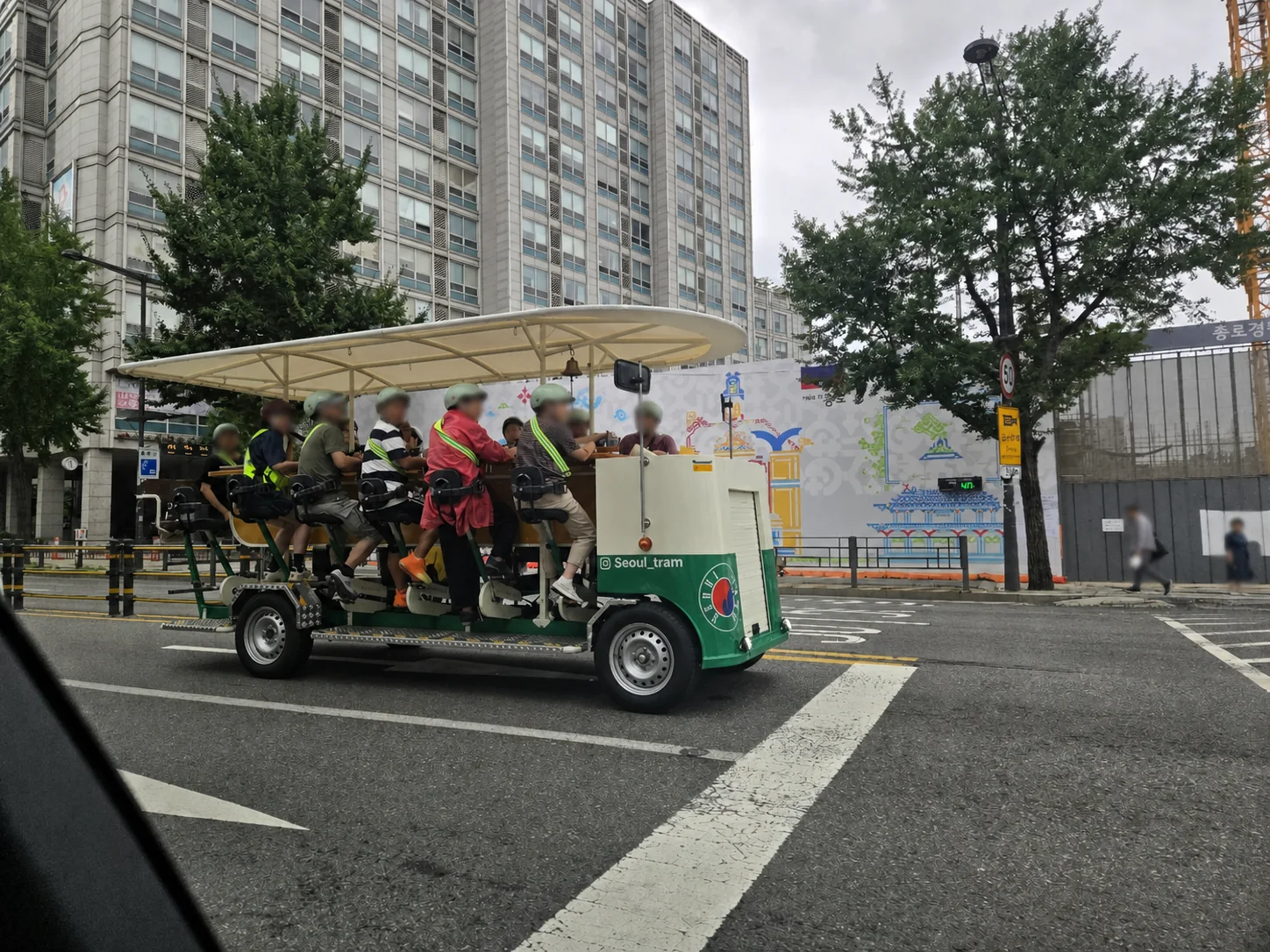
The name is inspired by the trams that once ran through Seoul, but the current vehicle runs on tires in normal road traffic. Depending on the season and product, routes can include areas around Gwanghwamun, Gyeongbokgung, Deoksugung, Cheonggyecheon, Insadong, Ikseon-dong, Changdeokgung, or Bukchon. Some products include short walking sections.
Seoul Tram Duration and Price
The dedicated Seoul Tram site showed 1-hour, 1.5-hour, and 2-hour products at approximately KRW 60,000, KRW 75,000, and KRW 105,000 when checked on August 30, 2026, with a stated capacity of up to 12 people. Routes and booking conditions change by season. The separate English booking page also indicated that some English tours may be available only by private inquiry. Confirm the language, final price, meeting point, and whether the quoted amount is per participant or per booking before payment.
Important Safety and Child Rules
The operator asks guests to arrive about 20 minutes early for a safety briefing and equipment fitting. Weather can also change or cancel the ride. The official pages currently describe child eligibility with height and age wording that does not fully match across pages. If anyone in your group is a child—or has mobility, balance, or pedaling concerns—contact the operator before booking rather than relying on a third-party summary.
Which One Should You Choose?
Choose Tiger Bus if:
- This is your first visit to Seoul.
- You want to see several major landmarks with less walking.
- You like the flexibility of choosing a few stops.
- You want an audio guide and a simple overview before using the subway independently.
- You are traveling with someone who may find repeated subway transfers tiring.
Choose Seoul Tram if:
- You want the activity itself to be the main experience.
- You are traveling with friends or a private group.
- You enjoy interactive, photo-friendly tours.
- You are comfortable with a fixed guided route and safety instructions.
- You have confirmed the language and physical requirements directly with the operator.
For a first visit, my practical recommendation is the Tiger Bus. Seoul Tram looks fun, but it is a separate paid experience rather than a substitute for transportation. If you already know central Seoul and want something social and unusual, the Tram becomes more interesting.
Uncle Choi’s Practical Tips
- Start early. You will have more useful reboarding opportunities and more time at palace stops.
- Do not mix operator tickets. A red Tiger Bus ticket and a blue sightseeing-bus ticket are not automatically interchangeable.
- Check the final bus before getting off. Missing it can leave you far from your original boarding point.
- Bring earphones. Tiger Bus advertises multilingual audio guidance, but using your own comfortable pair can make the ride easier.
- Watch the weather. An upper-deck view is excellent, but strong sun, rain, wind, or heat can change the experience quickly.
- Allow for road closures. Gwanghwamun regularly hosts festivals, official events, and large gatherings.
- Photograph your ticket or QR code. Keep the original available as well.
A Simple First-Day Route
Begin at Gwanghwamun, take a few minutes to see the square, and board the daytime Tiger Bus. Get off for one palace, continue toward Insadong or Myeongdong, and finish with Namsan if the weather is clear. Do not fill every hour. The bus is most useful when it removes awkward transfers, not when you spend the entire day waiting for the next vehicle.
If you are planning a longer first visit, combine this idea with my 3-day Seoul itinerary. SeoulExperience.com and I focus on realistic routes that leave room for meals, weather, and the small delays that happen in a real city.
Is the Seoul City Tour Bus Worth It?
Yes, especially on your first day, if you value orientation and reduced walking more than the cheapest possible transportation. Seoul’s subway is faster for many point-to-point trips, but it does not show you how neighborhoods connect above ground. The bus gives you that visual map. It is less valuable if you already know exactly where you are going or if heavy traffic makes you impatient.
Seoul Tram can also be worth it, but for a different reason. You pay for a guided group activity, not an efficient city pass. Decide which experience you actually want before comparing only the ticket prices.
Frequently Asked Questions
Is the Seoul City Tour Bus hop-on, hop-off?
The Tiger Bus Downtown, Palaces & Namsan daytime course is hop-on, hop-off. The Han River & Namsan night tour is a continuous route and does not offer regular hop-off sightseeing stops.
Where does the Tiger Bus start?
The principal starting point for the routes covered here is the Gwanghwamun ticket booth near the Koreana Hotel and Gwanghwamun Station Exit 6. Confirm the current boarding point on the official site.
Can I use one ticket on every Seoul sightseeing bus?
No. Seoul has different sightseeing-bus operators. Check the operator, route name, and vehicle before boarding.
Is Seoul Tram public transportation?
No. Seoul Tram is a privately operated, guided, pedal-assisted sightseeing experience. It does not run on rails and cannot replace a subway or bus trip.
Can children ride Seoul Tram?
The operator publishes safety requirements, but its current pages do not use fully consistent age and height wording. Families should confirm eligibility directly before booking.
Should I reserve in advance?
Advance booking is sensible for night tours, busy weekends, holiday periods, and Seoul Tram. Day-bus availability and departure intervals can still change, so check the official timetable on your travel date.
Information and prices checked August 30, 2026. Routes, fares, vehicles, and operating conditions can change. Official references: Tiger Bus, Seoul Tram, and WeRide English tour information.