Seodaemun Prison History Hall: Plan a Winter Visit from Dongnimmun
Seodaemun Prison History Hall is a worthwhile stop if you want to understand Korea’s independence movement, but give it time and emotional space. In November, the museum closes at 5 p.m. A late-afternoon arrival can leave you choosing between reading the exhibits and seeing the prison buildings. This guide helps you plan a focused visit from Dongnimmun Station without treating the site as a quick photo stop.
Visitor information checked November 7, 2026. This is a researched planning guide, not a claim of a recent on-site visit. Suggested timings below are editorial estimates.
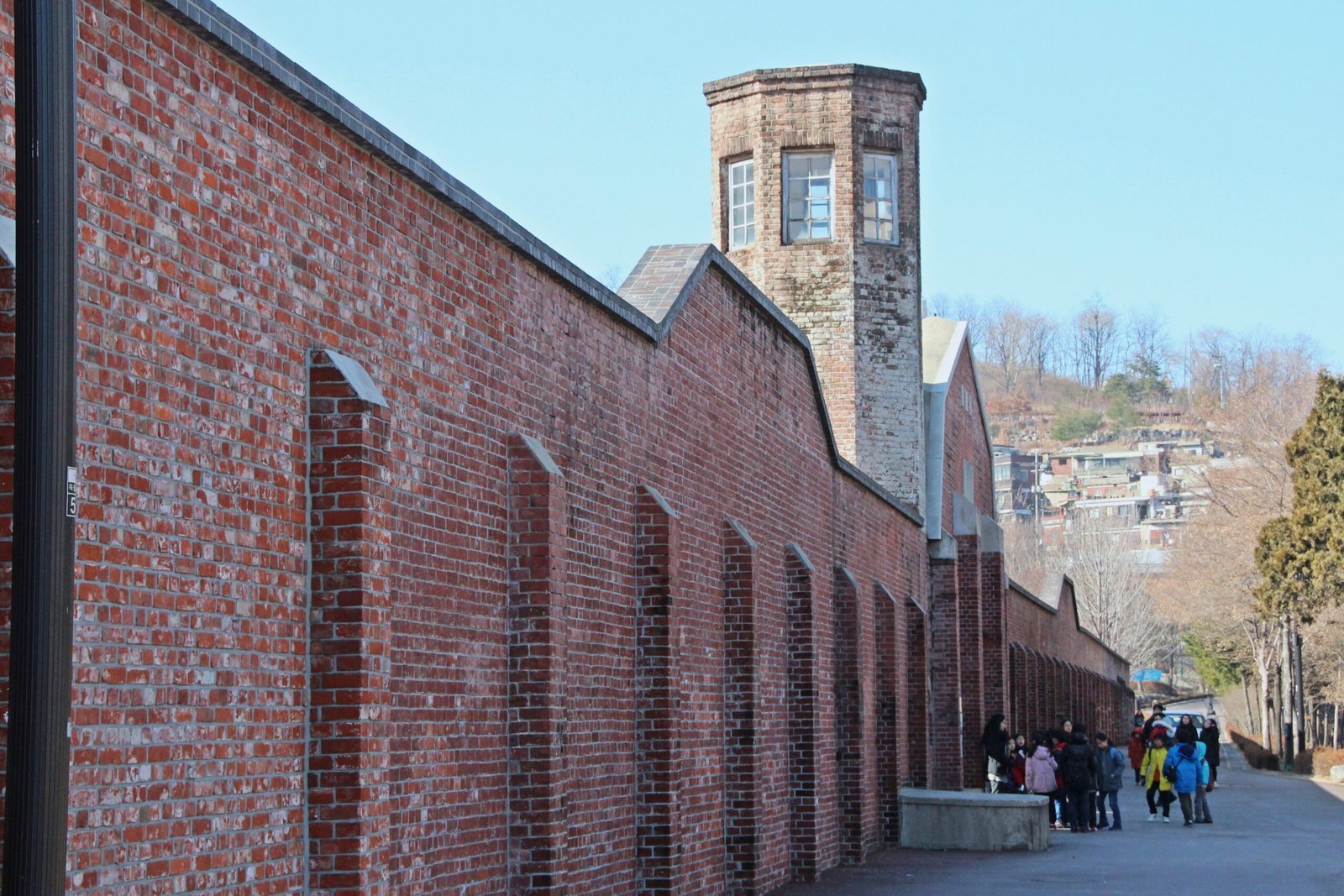
Featured photo: The Old Seodaemun Prison by Noh Mun Duek, photographed February 2, 2013, via Wikimedia Commons, CC BY-SA 4.0. Archival exterior view, not a current conditions photo. No creative edits; WordPress may resize or crop for display. Any image adaptations on this site remain under CC BY-SA 4.0.
Decide whether this visit fits your day
The former prison held independence activists during Japanese colonial rule and later pro-democracy activists. Its exhibition spaces, cells and grounds are places to learn about imprisonment and resistance. The museum’s exhibition guide describes torture displays and survivor testimony in the basement interrogation area.
Content note: displays concern torture, execution and confinement. Consider your own comfort and any children’s readiness before entering. You can ask staff which sections to skip and shorten the visit. There is no need to see every room to engage respectfully with the history.
Choose this over another palace visit if modern Korean history is your priority. If you want a broader introduction to the city instead, see our Seoul Museum of History guide. Seodaemun includes outdoor movement between buildings, so it is not an entirely indoor bad-weather plan.
Winter hours: last admission is not a good target arrival
- November–February: 9:30 a.m.–5 p.m.; last admission 4:30 p.m.
- March–October: 9:30 a.m.–6 p.m.; last admission 5:30 p.m.
- Closed: Mondays, January 1, Seollal day and Chuseok day. When Monday is a public holiday, the closure moves to the following day.
The official winter-hours notice covers November 1, 2026 through February 28, 2027. The museum’s FAQ gives an average visit of one to one-and-a-half hours.
Our planning advice: aim to enter by 3 p.m. in winter if you want 90 minutes inside plus a little margin. Entering at the official 4:30 p.m. cutoff leaves only half an hour. A 10 a.m. start is easier to build into a relaxed half-day: visit first, then have lunch outside the museum rather than rushing through the last rooms.
How to get there without confusing the station names
Use Dongnimmun Station (독립문역), Subway Line 3, toward Exit 5, the approach listed in the museum’s directions. Follow signs for 서대문형무소역사관 in Independence Park. Do not choose Seodaemun Station merely because it shares the museum’s name.
From Line 2, transfer at Euljiro 3-ga; from Line 4, transfer at Chungmuro; from Lines 1 or 5, use Jongno 3-ga to reach Line 3. Check your navigation app for the departure time and platform direction. Allow extra time for transfers and finding the entrance rather than treating the short distance from the station as your entire journey.
Save this destination: 서대문형무소역사관, 서울특별시 서대문구 통일로 251 (251 Tongil-ro, Seodaemun-gu, Seoul). Exit 5 is an orientation point, not a verified step-free route. If stairs are a concern, check the station elevator route and ask the museum about access before travel. The museum discourages driving because parking is limited.
Tickets and payment
Standard individual admission is ₩3,000 for adults aged 19–64, ₩1,500 for ages 13–18 and ₩1,000 for ages 7–12. Ages 6 and under and 65 and over are listed as free. Free or discounted admission is issued on site; bring proof of eligibility and ask the staffed counter. Check the official admission page for other eligibility rules.
The staffed ticket booth lists cards and cash; the self-service machine lists cards. We have not verified acceptance of every overseas-issued card, so a small amount of Korean cash is a sensible backup for the staffed booth. Guided-tour reservations are separate from simply planning a self-guided visit.
A focused 90-minute visit
This is a flexible time budget, not an official timed tour. Pick up the current leaflet, check for closed areas and follow the on-site route signs. Give priority to understanding the exhibits rather than completing a checklist.
- First 10 minutes: orient yourself. Find the exhibition hall, check the current route and decide whether the more distressing sections suit your group. Set a meeting point if anyone prefers to sit out a section.
- Next 30 minutes: read the historical introduction. The former administration building presents the prison’s history and the independence movement. Spend time with the prisoners’ records rather than using the building only as a passage to the cells. Treat the basement as an optional section, based on your comfort.
- Next 30 minutes: explore the central building and open cell blocks. The official cell-block guide explains prison organization, daily life and the spaces where independence and democracy activists were held. Read the interpretation before moving on; not every building needs equal time.
- Final 20 minutes: grounds, reflection and exit. Use the remaining time for the outdoor spaces that are open and appropriate for your group. If you spent longer reading, shorten this part instead of rushing toward closing time.
For a 60-minute visit, focus on the introductory exhibition and one open cell-block section, leaving the wider grounds for another day. For two hours, add reading time and breaks. Cold, rain or a busy school-group visit can change the pace; none of these timings guarantees that every area will be available.
English explanations, accessibility and practical limits
The official tour page lists free docent tours in Korean, English, Chinese and Japanese, with reservations opening 14 days before the visit. It limits these tours to groups of 20 or fewer and excludes children aged 10 and under. Check the actual language and available slot before relying on a tour. Sunday walk-up sessions are advertised, but their listing does not promise English.
The FAQ lists wheelchair and stroller loans with an ID deposit. This does not establish that every historic room or the route from the station is step-free. For access information, the facilities page directs visitors to the exhibition-hall information desk, telephone +82-2-360-8570. Confirm the route that fits your needs, including any basement or upper-floor sections.
- Eat before or after: eating is not allowed inside the museum. The designated rest space has seating, but it is not a lunch area.
- Dress for mixed indoor and outdoor time: bring a warm layer and weather protection in winter.
- Keep photography respectful: follow room-specific signs. The visitor rules prohibit flash, tripods and commercial filming or photography; a standard admission ticket is not permission for a shoot.
- Leave breathing room afterward: avoid booking a tightly timed activity immediately after a visit that may feel emotionally demanding.
November website notice and a final check
A notice posted November 6 says website upgrade work is planned for November 16–30, 2026, with possible temporary delays or errors. This is a website-service notice, not a museum-closure announcement. If booking pages fail during that period, do not assume you have a reservation. Save the details you need and check with the museum at +82-2-360-8590.
Before leaving, recheck the official museum website for closures and current notices. Save the Korean name, choose a start time comfortably before last admission, and keep your visit as long or as short as your group needs. Use our Seoul travel map to place the stop in your wider itinerary.