Seoul Station Luggage Storage: Lockers, T-Luggage and Pickup Deadlines
For Seoul Station luggage storage lasting a few hours, start with a Seoul Metro T-Locker if your bag fits and a compartment is available. Choose staffed T-Luggage if you want help at drop-off. If you need your bag after the station closes, arrange storage outside the station with confirmed late access. The most expensive mistake is choosing a cheap locker you cannot reopen before your train or flight.
Last checked: 16 October 2026, Korea Standard Time. This is a desk-researched planning guide based on operator and public-agency information, not a report of a personal test visit. Prices and access rules can change; the tariff and collection deadline shown when you book or pay take priority.
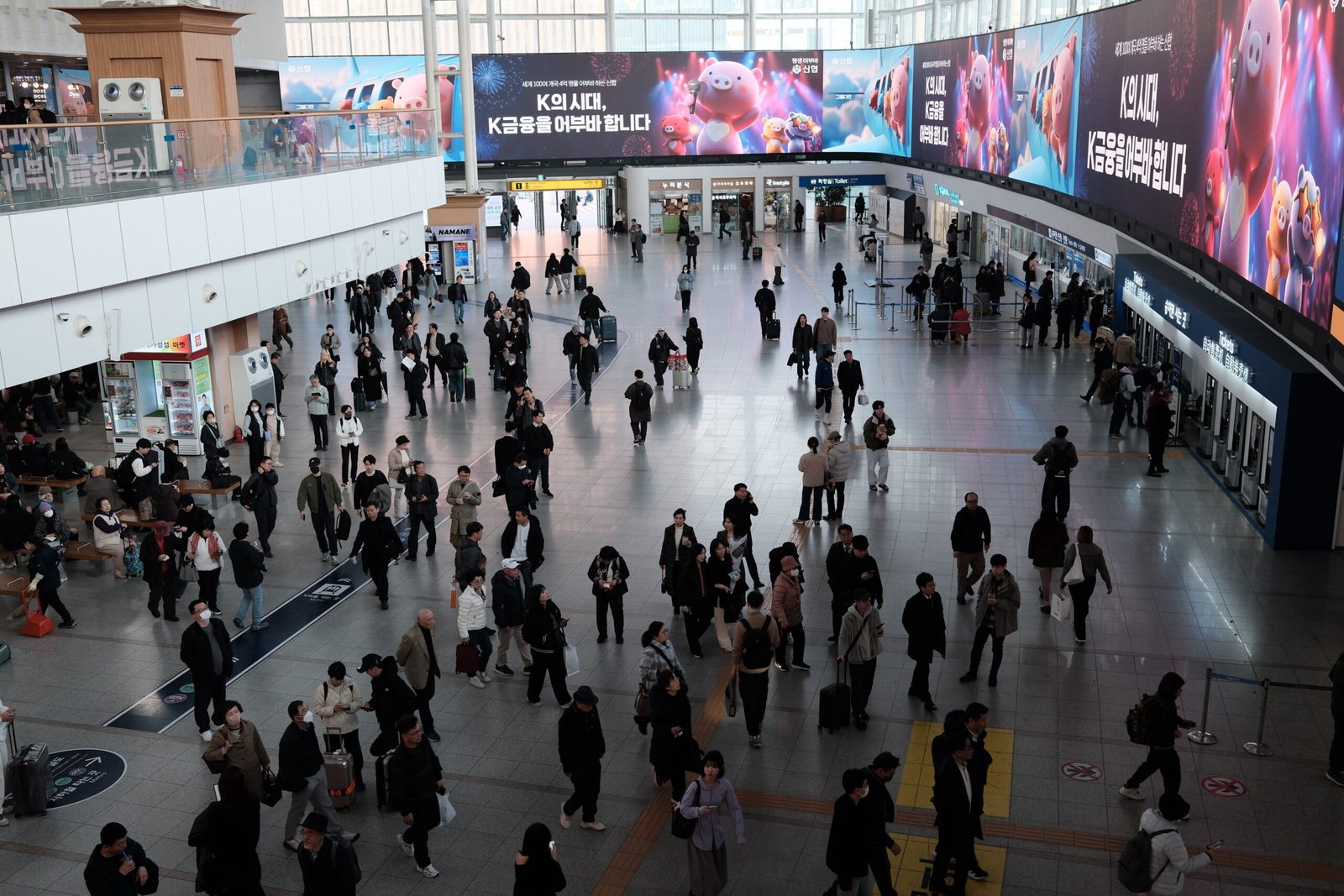
Header photo: Seoul Station concourse, 16 March 2026, by RyuMinjoo / Wikimedia Commons, CC BY-SA 4.0. Resized by WordPress; no content edits. The photo and resized versions retain that license. It shows the station atmosphere, not the location of a storage counter.
Which Seoul Station luggage storage option fits your day?
- A short daytime stop: check a suitably sized Metro T-Locker. Compare the four-hour base charge and extra hours, rather than the cheapest advertised price alone.
- A bulky bag or a preference for staff assistance: use T-Luggage, subject to its size classification and accepted-items rules.
- A very late return: ask your accommodation about storage or consider the independent 24-hour option below. Station lockers are not a safe assumption for overnight access.
- No reason to return to Seoul Station: storage near your hotel or next destination may save a detour. A small saving is rarely worth carrying bags across town twice.
1. T-Luggage: a staffed counter on B1
The operator’s Seoul Station listing places T-Luggage on B1, from subway Exit 1 toward Exit 2. Look for the T-Luggage name in the subway area; the main railway concourse and the AREX levels are different parts of the station.
Hours conflict: the main operator page lists 09:00–22:00, while another reservation template lists Seoul Station as 10:00–22:00. Confirm directly before planning a 09:00–10:00 drop-off. Arrange collection before the closing time confirmed for your booking; do not rely on after-hours access.
Published storage prices per bag, first four hours:
- Small, roughly up to 20 inches: ₩3,000 weekday / ₩4,000 weekend
- Medium, roughly 20–23 inches: ₩4,000 / ₩6,000
- Large, roughly 23–27 inches: ₩6,000 / ₩9,000
- Extra-large, roughly 27 inches and above: ₩9,000 / ₩13,000
After four hours, the published extra charge is ₩1,000 per hour for each size. These are not daily prices. The size bands overlap at their boundaries, so ask how your actual packed bag will be classified.
Booking and collecting your bag
The official storage reservation page lets you select the center, date and number of bags. Choose storage, not delivery, if you intend to return for the same bags. The site also permits counter and phone applications; availability is not guaranteed merely because a counter exists.
Keep the confirmation email and reservation code accessible. The operator FAQ says on-site credit-card payment is available and warns that a missing reservation receipt complicates collection. Food and valuables are excluded. Check the current prohibited-items terms before handing over electronics, fragile items or unusual equipment. For overnight storage, ask for the full charge and next-day collection time rather than extending the hourly example below yourself.
2. Seoul Metro T-Lockers: self-service storage
Seoul’s official storage guide lists these T-Locker rates per compartment for the first four hours:
- Small: ₩2,200 weekday / ₩3,100 weekend; then ₩500 per hour
- Medium: ₩3,300 / ₩4,600; then ₩800 per hour
- Large: ₩4,400 / ₩6,100; then ₩1,000 per hour
These are Metro T-Locker reference rates, not a price promise for every locker in the railway or AREX sections. Check the operator name and tariff on the bank you choose. Measure your bag with its wheels and handles: published compartment dimensions differ between official pages, so an airline suitcase label alone does not establish fit.
Where to look
The Seoul Metro location dataset, dated 30 June 2026 and updated in September, identifies three banks in the Line 1 area: near Exit 1; in the corridor between Exits 2 and 3; and in that corridor near the toilets. These are installation locations, not live availability. Follow current station signs and the bank’s own instructions.
App, QR access and the overnight trap
The T-Locker operator offers QR-based immediate storage on the web and app reservations up to two hours ahead. Older banks may work differently. Check that you can complete the payment and retrieval process before leaving your bag. If verification or payment requires a method you cannot use, choose staffed storage instead. Foreign-card compatibility was not tested for this guide.
Its July 2026 notice gives weekday access as 05:00–midnight; weekend and holiday station closure may be earlier. Once the station closes, retrieval waits until after 05:00 the next morning, while hourly charges continue. Confirm the actual bank’s latest access time and return comfortably before it.
What does a full afternoon actually cost?
For exactly eight weekday hours, using the published rates above:
- One large Metro locker: ₩4,400 + four extra hours × ₩1,000 = ₩8,400
- One bag classified Large at T-Luggage: ₩6,000 + four extra hours × ₩1,000 = ₩10,000
- The difference: ₩1,600. Staff assistance or avoiding a search for a free locker may matter more to you than that saving.
This is an arithmetic example, not a live quote. The two “large” categories do not guarantee the same capacity. Extra minutes, a different bag category, a weekend or a holiday may change what you pay. Confirm any partial-hour rounding and holiday tariff before payment.
3. Need collection after midnight? Look outside the station
LuggageDot is an independent self-service shop at 9 Huam-ro 57-gil, Yongsan-gu, ground floor. Its own website advertises 24/7 access and prices from ₩1,000 per locker per started hour: two hours and one minute is billed as three hours. It is outside the station, so allow for the street-level walk with your bags.
The advertised large compartment is approximately 87 cm high × 40 cm wide × 57 cm deep. Check the actual fit, full price and availability. The operator says reservation requests are possible but contact is required on arrival because the shop is unmanned. Confirm the late-entry and retrieval procedure before relying on it for a flight. This listing is based on the operator’s information, not a personal service test.
What about AREX lockers and the old Travel Center?
The current AREX facilities page confirms luggage lockers on B3 at Seoul Station. We could not verify a current official price and access-hour table, so compare the posted terms in person rather than applying Metro T-Locker prices to them.
Older articles also mention a staffed AREX Travel Center. We could not verify its current storage service, fees and hours from current official information. That uncertainty is not proof that it has closed; it is a reason to avoid making it your only plan.
The City Airport Terminal is a separate airline check-in and baggage-acceptance service with eligibility conditions for same-day international departures. It is not a general-purpose left-luggage counter.
A five-minute checklist before you walk away
- Set your collection time first. Work backward from your train, including retrieval, station walking and boarding. A 22:00 counter closing is not a suitable 22:00 collection appointment.
- Keep essentials with you. Passport, medication, payment cards, phone and charging power should remain accessible. Follow the operator’s prohibited-items rules.
- Save the exact location. Photograph the bank name, compartment number and nearby sign. “Seoul Station locker” is too vague when several levels and operators are involved.
- Keep the code and receipt. Make sure the person returning can use them. Keep your phone charged, and confirm what happens if it stops working.
- Check your onward route. Collect your bags before joining the correct train area. For airport planning, see our AREX, bus and taxi comparison; for city transfers, see the Seoul subway guide.
Bottom line: choose by collection deadline, bag fit and your onward route, then compare cost. A confirmed place to retrieve your suitcase on time is more useful than an unverified bargain.