Myeongdong Chicken Skewers: Dakkochi Street Food Guide
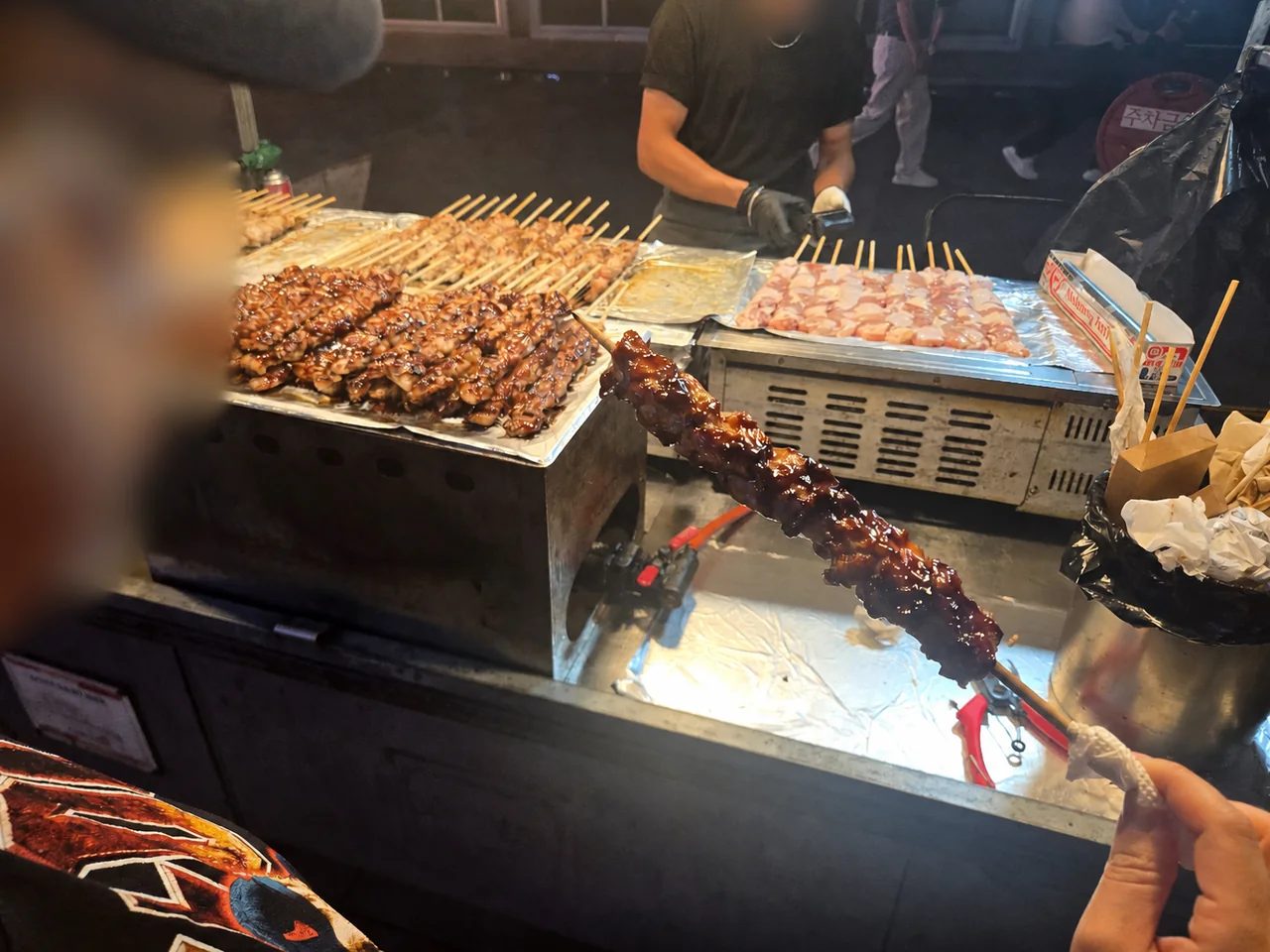
Myeongdong chicken skewers are one of the easiest street foods to try while walking through Seoul’s busiest shopping district. The sweet, smoky smell reaches you first; then you see long skewers brushed with glossy sauce. I usually eat a few pieces, shorten the empty end of the wooden stick with the stall’s scissors, and keep going. If the sauce is hotter than expected, I order cold sikhye—a sweet traditional Korean rice drink—to cool things down.
Quick Answer
Dakkochi is chicken grilled on a wooden skewer and usually finished with a sweet, savory, or spicy sauce. In Myeongdong, food stalls gather around Myeongdong-gil and the central shopping streets reached from Myeongdong Station on Line 4. Stall hours, prices, sauces, and payment methods vary, so check the sign before ordering. My practical combination is simple: shorten the exposed wooden stick only when the seller provides scissors, and pair a spicy skewer with chilled sikhye.
Myeongdong Chicken Skewers at a Glance
| What to know | Practical answer |
|---|---|
| Korean name | Dakkochi (닭꼬치) |
| What it is | Grilled chicken pieces on a wooden skewer, usually coated with sauce |
| Where to look | Myeongdong-gil and the surrounding central shopping streets |
| Nearest subway | Myeongdong Station, Line 4, Exits 5–10 |
| Best atmosphere | Late afternoon into the evening; exact stall schedules vary |
| Price and payment | Check each stall’s posted sign; both can differ by vendor |
| Uncle Choi’s pairing | Spicy dakkochi with cold sikhye |
What Is Dakkochi?
Dak means chicken and kkochi means skewer. The basic idea is straightforward: pieces of chicken are threaded onto a long wooden stick, grilled, and brushed with sauce. The result is smoky at the edges, juicy inside when cooked well, and easy to carry while you browse.
There is no single Myeongdong recipe. One stall may lean sweet and soy-forward, while the next adds a much hotter red sauce. Some sellers offer a mild option or let you choose the heat level; others prepare only the sauce displayed that day. Point to the sauce you want, confirm whether it is spicy, and watch the final coating before accepting the skewer.
Why It Works So Well in Myeongdong
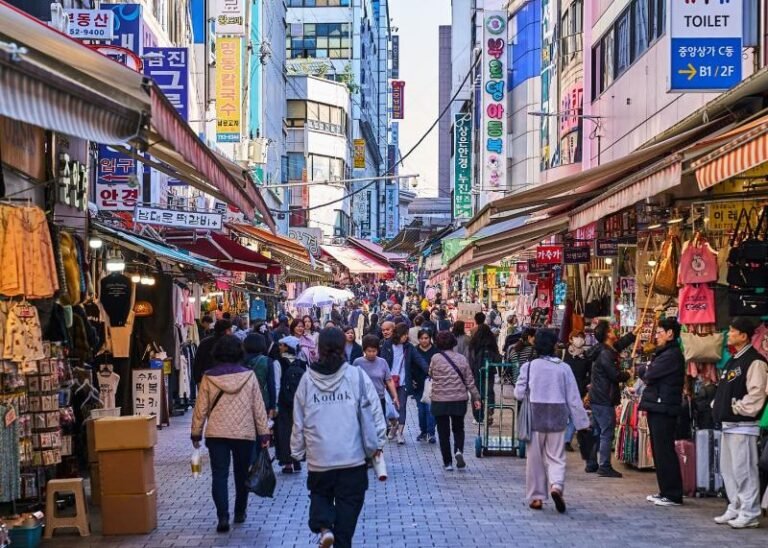
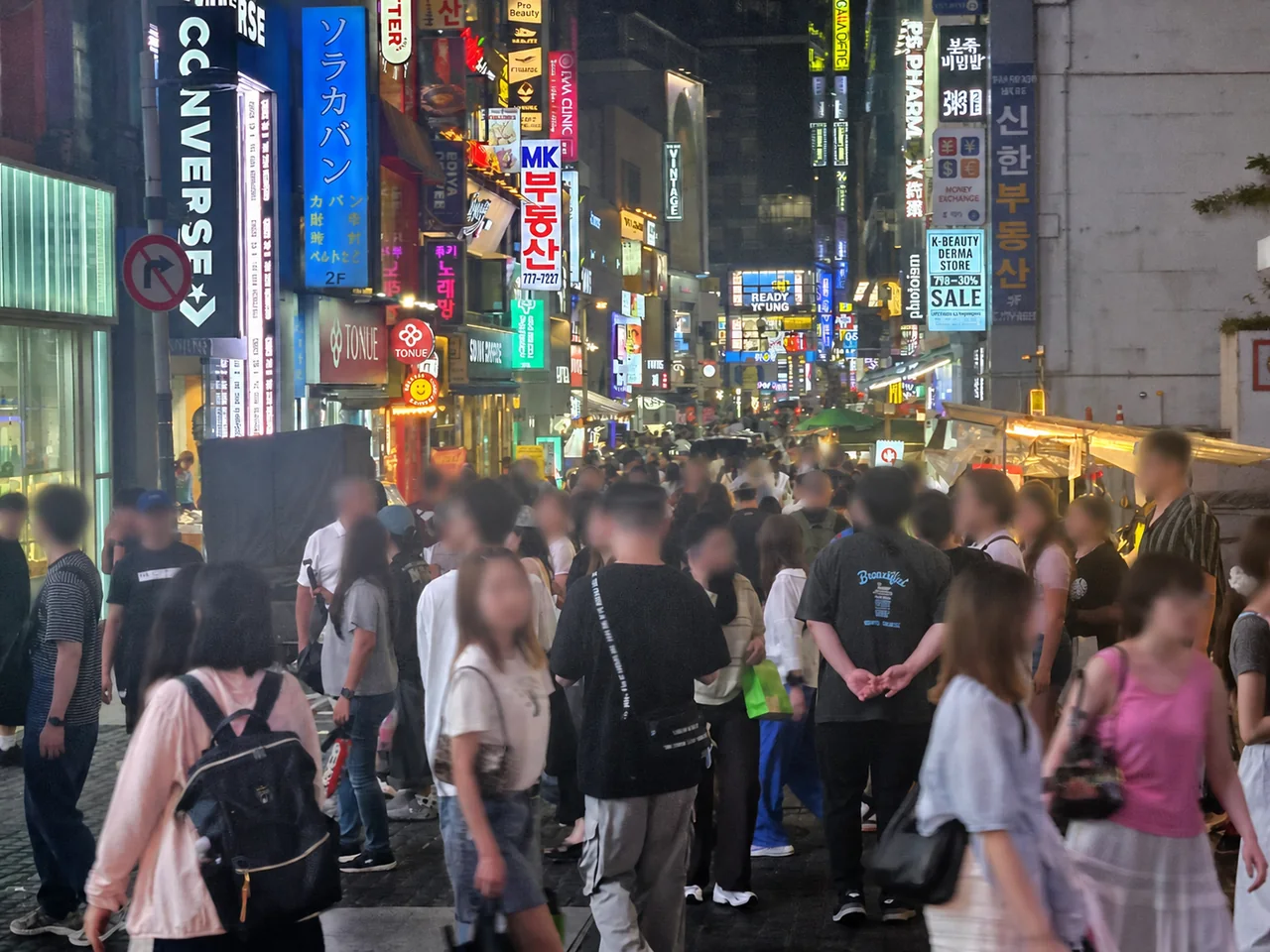
Myeongdong is built for walking. You move between cosmetics stores, fashion shops, pharmacies, cafés, and food stalls, often with very little time spent sitting down. Dakkochi fits that rhythm: it is a substantial snack, served hot, and can be eaten without a plate.
The stall in my photos grilled many skewers at once but kept raw chicken separate from the finished, sauced batch. That visible cooking process is useful: you can see what is being prepared and wait for a fresh skewer. If a piece still looks undercooked, do not hesitate to ask the seller to grill it longer.
Uncle Choi’s Scissor Trick
A long wooden stick becomes awkward after the first few bites, especially in a dense crowd. Here is the trick I use: after eating the top two or three pieces, I cut off the now-empty end of the stick with the scissors provided at the stall. Then I repeat as I work downward. The skewer stays shorter, is easier to control, and is less likely to poke someone walking past.
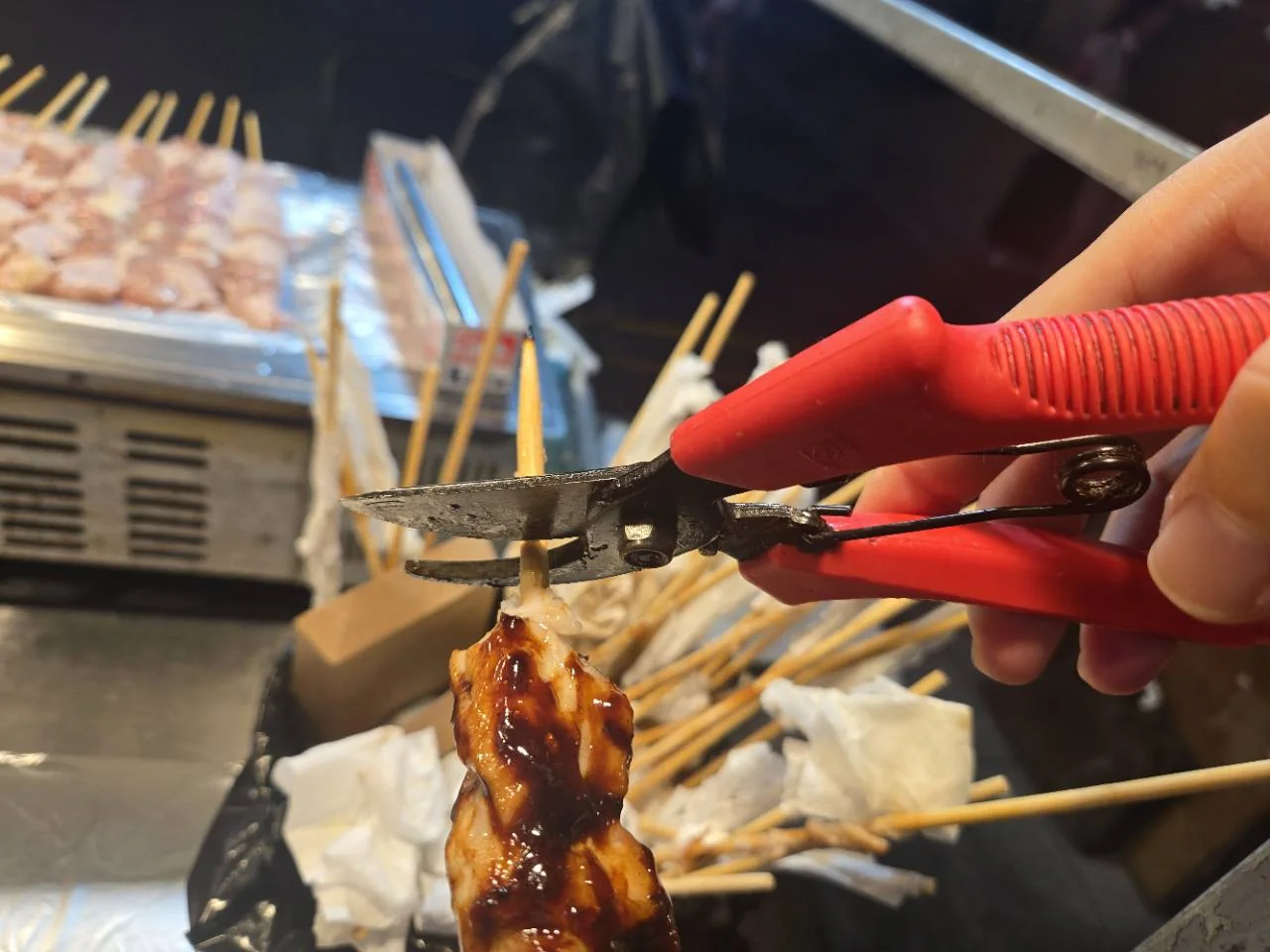
Use this tip only if the vendor provides scissors and indicates that customers may use them. Cut only the empty wooden section, keep the blades pointed down and away from other people, and follow the stall’s instructions for discarded pieces. Children should not handle the scissors. This is one of those small Seoul street-food details I record for SeoulExperience.com because it makes the actual experience noticeably easier.
If the Sauce Is Spicy, Drink Sikhye
My strongest recommendation is to order sikhye (식혜) with a spicy chicken skewer. Sikhye is a traditional Korean sweet rice drink made by fermenting cooked rice with malt. It is usually served cold, and you may see soft rice grains settled at the bottom or floating in the cup.
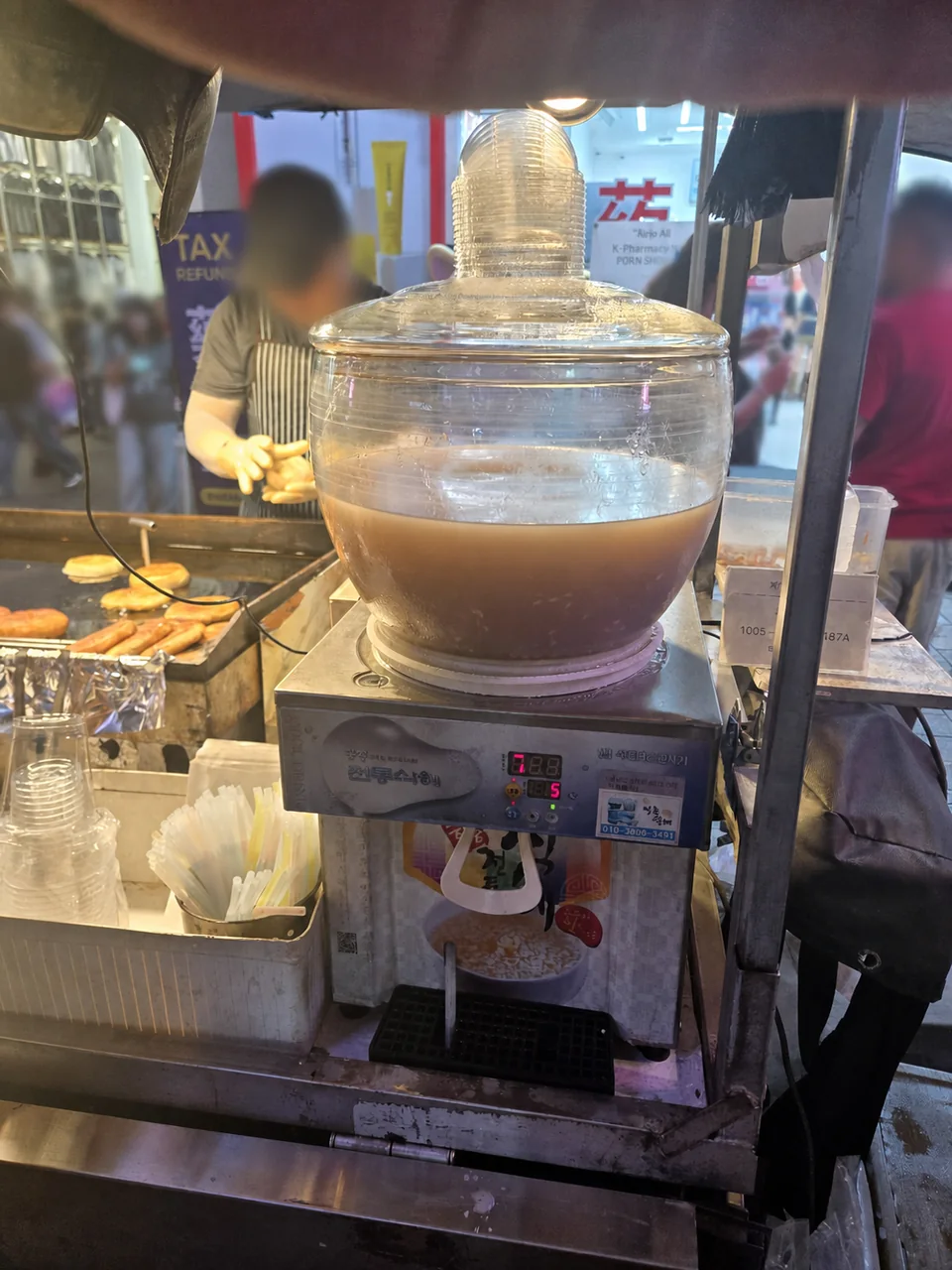
The pairing works because the drink is cool and gently sweet while dakkochi sauce can be hot, sticky, and smoky. Sikhye does not erase chili heat completely, but it gives you a refreshing break between bites. Stir or swirl the cup near the end if you want to catch the rice grains. If you have never tried a Korean traditional drink, this is an easy first one.
How to Choose a Stall and Sauce
- Look at the cooking queue. A busy grill usually means skewers are turning over quickly, but you may need to wait.
- Read the displayed price before ordering. Myeongdong stalls are independent vendors, so do not assume every skewer costs the same.
- Ask about spice. “Spicy?” plus a pointing gesture is usually enough. If you want mild food, confirm before the sauce is brushed on.
- Check payment at that stall. Card, cash, and mobile-payment acceptance can differ. Do not rely on one universal rule for all Myeongdong vendors.
- Mention allergies clearly. Sauces may contain ingredients such as soy, wheat, or sesame, but recipes differ and the seller is the only reliable source for that batch.
- Do not assume chicken means halal. Ask about certification, ingredients, and shared cooking surfaces if this matters to you.
Where to Find Myeongdong Chicken Skewers
Start around Myeongdong-gil and the pedestrian shopping streets between Myeongdong Station and the Myeongdong Theater area. Visit Seoul’s official Myeongdong listing directs travelers to Myeongdong Station on Subway Line 4, Exits 5–10. If you are arriving from the north side, Euljiro 1-ga Station on Line 2 is another useful approach.
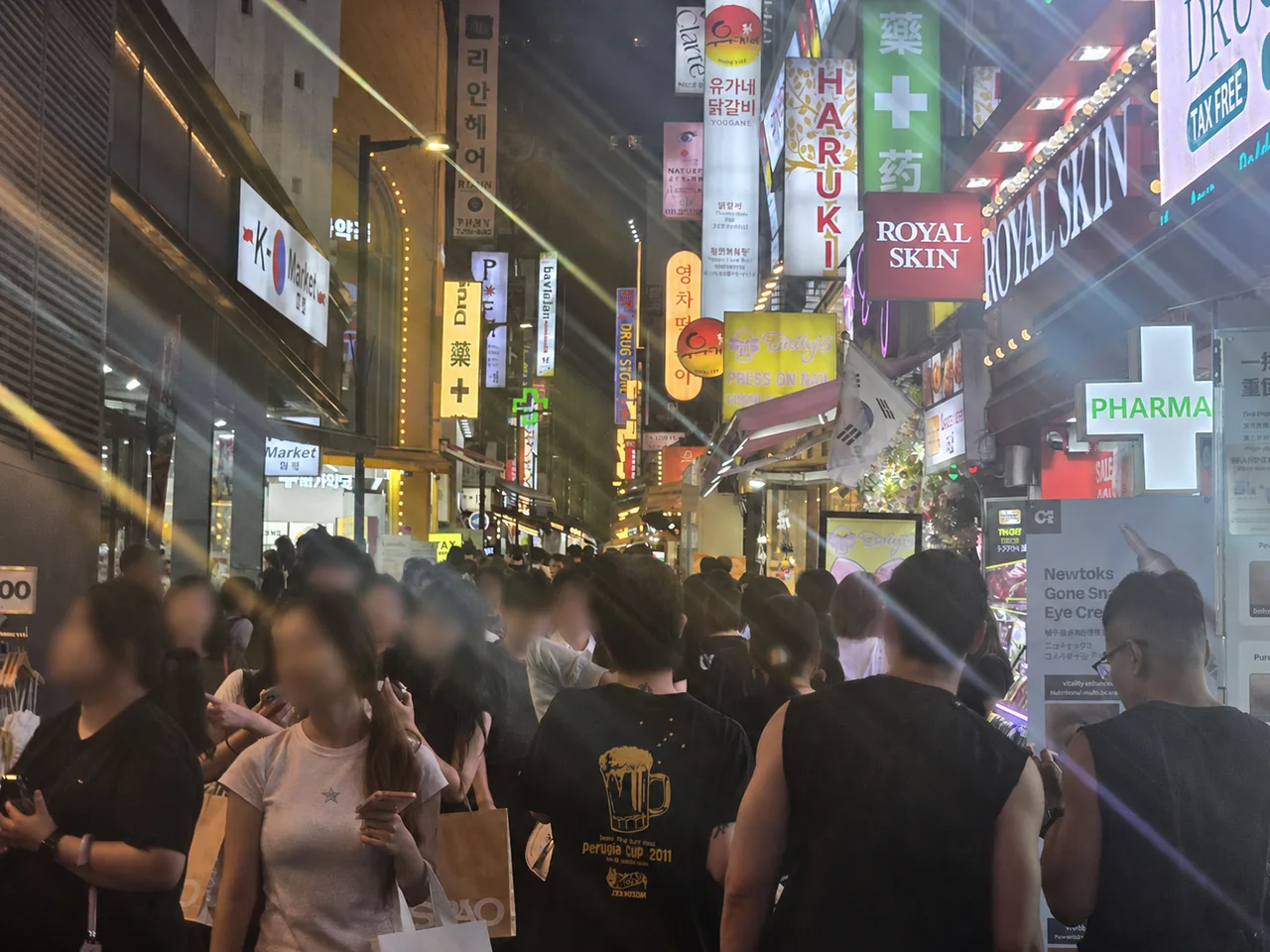
There is no single official opening time for every food stall. The official Seoul listing notes that hours vary by store, and outdoor vendors can also change with weather, events, and the day’s foot traffic. For the lively atmosphere in these photos, I recommend late afternoon through evening rather than early morning. If one lane looks quiet, walk a block or two before deciding the stalls are closed.
Street-Food Etiquette and Safety
- Step beside the stall while eating instead of stopping in the center of the walking lane.
- Keep the pointed skewer vertical and close to your body in crowds.
- Use the vendor’s trash container; do not place a sticky stick in a public bin without wrapping it.
- Expect little or no seating at many stalls.
- Eat grilled chicken while it is hot, but let the first piece cool enough to avoid burning your mouth.
- If you are sharing, order separate skewers rather than passing one long stick through a crowd.
Is Dakkochi in Myeongdong Worth Trying?
Yes—especially if this is your first evening in Seoul and you want one recognizable, filling street snack. Myeongdong is not the quietest place to eat, and it is not where I would search for the city’s lowest possible price. Its advantage is convenience: you can try dakkochi, drink sikhye, browse K-beauty stores, and continue toward Myeongdong Cathedral or Namsan without planning a separate food trip.
For a bigger food plan, compare this snack with our 20 must-try Korean foods in Seoul. If you want a sit-down-free breakfast in the same neighborhood, see the Isaac Toast Seoul guide. Travelers who prefer traditional markets can also use our Seoul food market comparison.
Frequently Asked Questions
What is a Korean chicken skewer called?
It is called dakkochi (닭꼬치): dak means chicken and kkochi means skewer. It is grilled and commonly served with a sweet, savory, or spicy sauce.
Are Myeongdong chicken skewers very spicy?
Not always. Heat levels and recipes vary by stall. Ask before the seller applies the sauce, and choose a mild or less-spicy option when available.
Why cut the wooden skewer with scissors?
Shortening the empty end after a few bites makes the long stick easier and safer to control in a crowd. Do this only with scissors supplied by the vendor, cut only the exposed wood, and keep children away from the blades.
What is sikhye?
Sikhye is a sweet traditional Korean rice drink made by fermenting rice with malt. It is generally served cold and may contain soft rice grains. I recommend it with spicy dakkochi.
When do Myeongdong street-food stalls open?
There is no universal schedule for every stall. Official tourism information says operating hours vary, and outdoor vendors may change with weather and foot traffic. Late afternoon and evening are the most practical times for the full street-food atmosphere.
Which subway exit is best for Myeongdong street food?
Visit Seoul lists Myeongdong Station on Line 4, Exits 5–10, for the shopping district. Choose the exit closest to your walking route; the stalls spread through several central streets rather than one fixed entrance.
Official Sources
- Visit Seoul: Myeongdong official area guide — access, address, and variable operating hours
- Visit Seoul: Myeongdong street-food overview — stalls and food types in the main shopping streets
- VISITKOREA: Sweet Rice Punch (Sikhye) — official food description
Last fact-checked: August 29, 2026. Stall schedules, sauces, prices, and payment methods can change. The food, scissor technique, sikhye pairing, and photographs are based on Uncle Choi’s own visit; transport and food definitions were checked against the official sources above.