Suwon Day Trip from Seoul: Short Walk or Full Fortress Circuit?
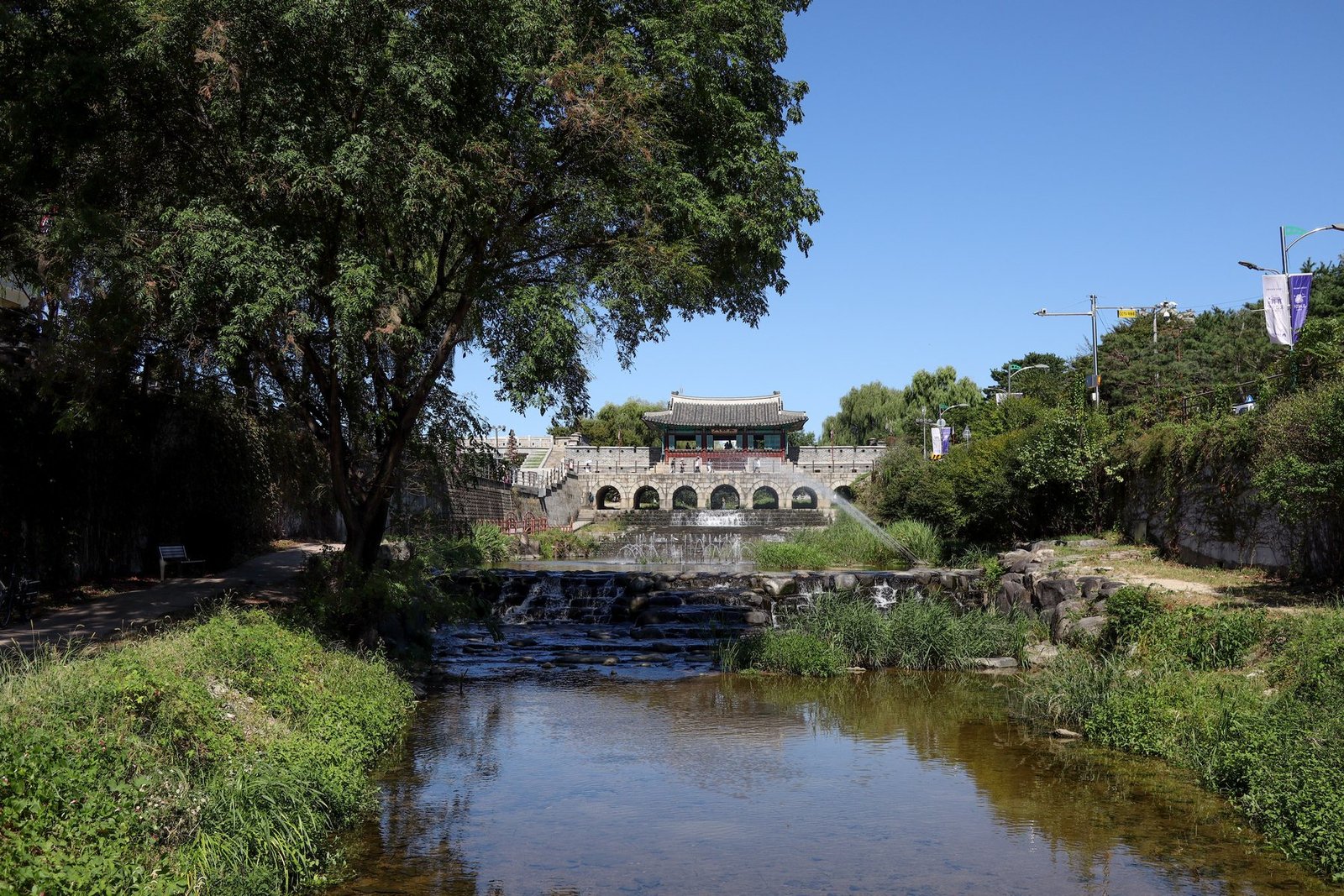
A Suwon day trip from Seoul works best when you choose your walking route before leaving. Most first-time visitors should walk the east and north sides of Hwaseong Fortress, have lunch in Haenggung-dong, then visit Hwaseong Haenggung Palace. Choose the full fortress circuit only if you want several hours of walking and are comfortable with a steep hill and many steps.
Allow a full day, roughly 7–9 hours from central Seoul for the recommended shorter route as a planning estimate. Suwon Station is a transport hub, not the entrance to the fortress: the local bus or taxi transfer is an essential part of the plan.
Research checked October 15, 2026. This independently researched itinerary uses official visitor information and accessibility guidance; it is not presented as a recent firsthand visit. Walking times and spending allowances are editorial estimates, not live transport quotes.
Choose the short route or the full circuit
- Best first visit: east/north walls plus palace. Start at Changnyongmun and Yeonmudae, walk toward Banghwasuryujeong, Hwahongmun and Janganmun, then turn into Haenggung-dong for lunch and the palace. Allow 90–120 minutes for the wall section with stops, plus lunch and 60–90 minutes at the palace. This avoids the major Paldalsan climb, but still includes steps and uneven surfaces.
- For enthusiastic walkers: full fortress circuit. Start near Paldalmun and tackle the western hill first. Allow 3–4 hours for the approximately 5.7 km fortress circuit with photo stops. Add meals, the palace and transport separately.
- For limited mobility: palace area and lower park paths. Use the ground-level paths near Janganmun, Hwahongmun and Yongyeon rather than assuming the battlement walk is step-free. Check the exact accessible approach with the tourist office.
Still deciding whether to leave Seoul? Our day-trip comparison explains when Suwon is a better fit than the DMZ, Nami Island or other nearby trips.
How to get from Seoul to Suwon
Option 1: Line 1 for a flexible day
Take a southbound Line 1 service that reaches Suwon Station (수원역). Line 1 branches, so check the train destination and the route in your map app instead of boarding solely because the platform says Line 1. From Seoul Station, allow roughly 60–75 minutes on the train for planning, plus your hotel-to-station journey and waiting time.
Use an ordinary rechargeable transport card such as T-money and check your balance before leaving. Do not assume the Seoul Climate Card covers Suwon. Seoul’s published Line 1 coverage on this branch stops at Geumcheon-gu Office, before Suwon. Tap out of buses as well as the subway so the transfer system can calculate your journey correctly.
Option 2: a reserved Korail train
A conventional mainline train can be convenient if Seoul Station or Yongsan is close to your hotel and a suitable departure stops at Suwon. Search your actual date, departure station and destination on Korail’s English booking site. Check the displayed fare and whether a seat is available before committing.
Allow roughly 30–45 minutes on a conventional Seoul–Suwon service as a planning range, not a timetable promise. A faster train does not always mean a faster door-to-door trip once waiting and transfers are included. Mainline tickets are separate from an ordinary subway-card journey.
From Suwon Station to the fortress
For the recommended east-side start, Suwon’s official directions list Exit 7, the stop across from the station, and bus 60 or 7-2 to Changnyongmun·Yeonmudae (창룡문·연무대). An alternative is bus 700-2 from platform 7 in the Suwon Station transfer center.
For a palace-first visit, the official route is Exit 4, the Suwon Station Novotel stop, and bus 11 or 13 to Hwaseong Haenggung·Suwon Seongji, followed by about five minutes on foot. Stops and services can change: confirm the boarding side, direction and live arrival in Naver Map or KakaoMap that morning.
Allow 30–45 minutes after arriving at Suwon Station for station navigation, waiting, the local bus and the final walk. If your group is tired or the bus transfer feels confusing, a taxi to the exact starting landmark is a reasonable fallback; check its meter or app estimate rather than relying on a fixed quoted fare.
The recommended one-day route
1. Start at Changnyongmun and Yeonmudae
Aim to arrive around 10:00–10:30. Save both Korean names: Changnyongmun (창룡문) is the east gate and Yeonmudae (연무대) is the nearby military training area. Use this open area to orient yourself before heading toward the northeast corner of the walls.
The official site lists Yeonmudae → Banghwasuryujeong → Janganmun as a one-hour course. Allow 90–120 minutes here for the pond, water gate, photographs and rests. Follow signed public paths and crossings whenever the wall route meets a road.
2. Slow down at Banghwasuryujeong, Yongyeon and Hwahongmun
Banghwasuryujeong (방화수류정) is the pavilion above the pond; Yongyeon (용연) is the pond below it. They are useful places to pause rather than hurry straight to the next gate. Continue to Hwahongmun (화홍문), the water gate over Suwoncheon.
To enjoy this area without repeatedly climbing up and down, choose either a short upper-wall section or the lower paths, then rejoin the route at a clearly signed access point. Do not cross barriers or assume every apparent ramp is an accessible public entrance.
3. Reach Janganmun, then head into Haenggung-dong
Continue west to Janganmun (장안문), the large north gate. This is the decision point: if you have already had enough wall walking, turn south into the neighborhood for lunch. If everyone still has energy, extend toward Hwaseomun before returning toward the palace.
Choose lunch by the current menu and queue rather than building the day around one viral restaurant. Check whether a displayed price is per person or per portion, especially for barbecue. A simple meal leaves more time for the palace; a long restaurant wait is a good reason to skip the optional wall extension.
4. Visit Hwaseong Haenggung early in the afternoon
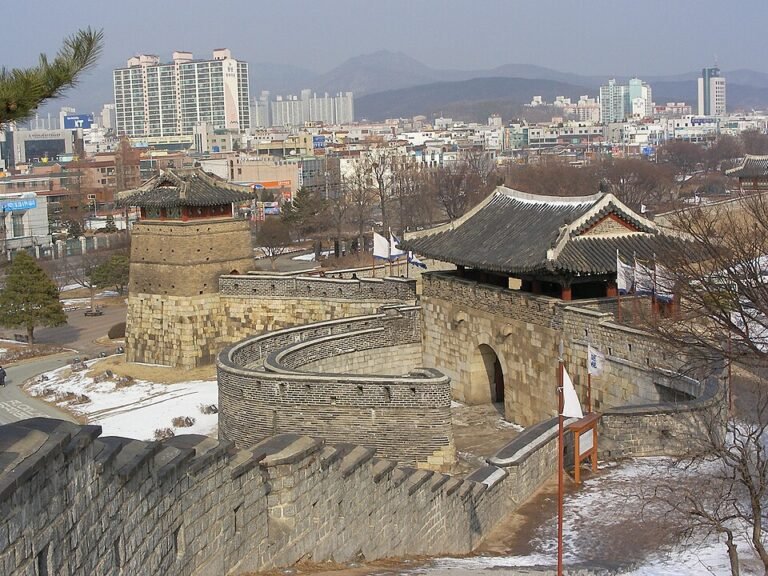
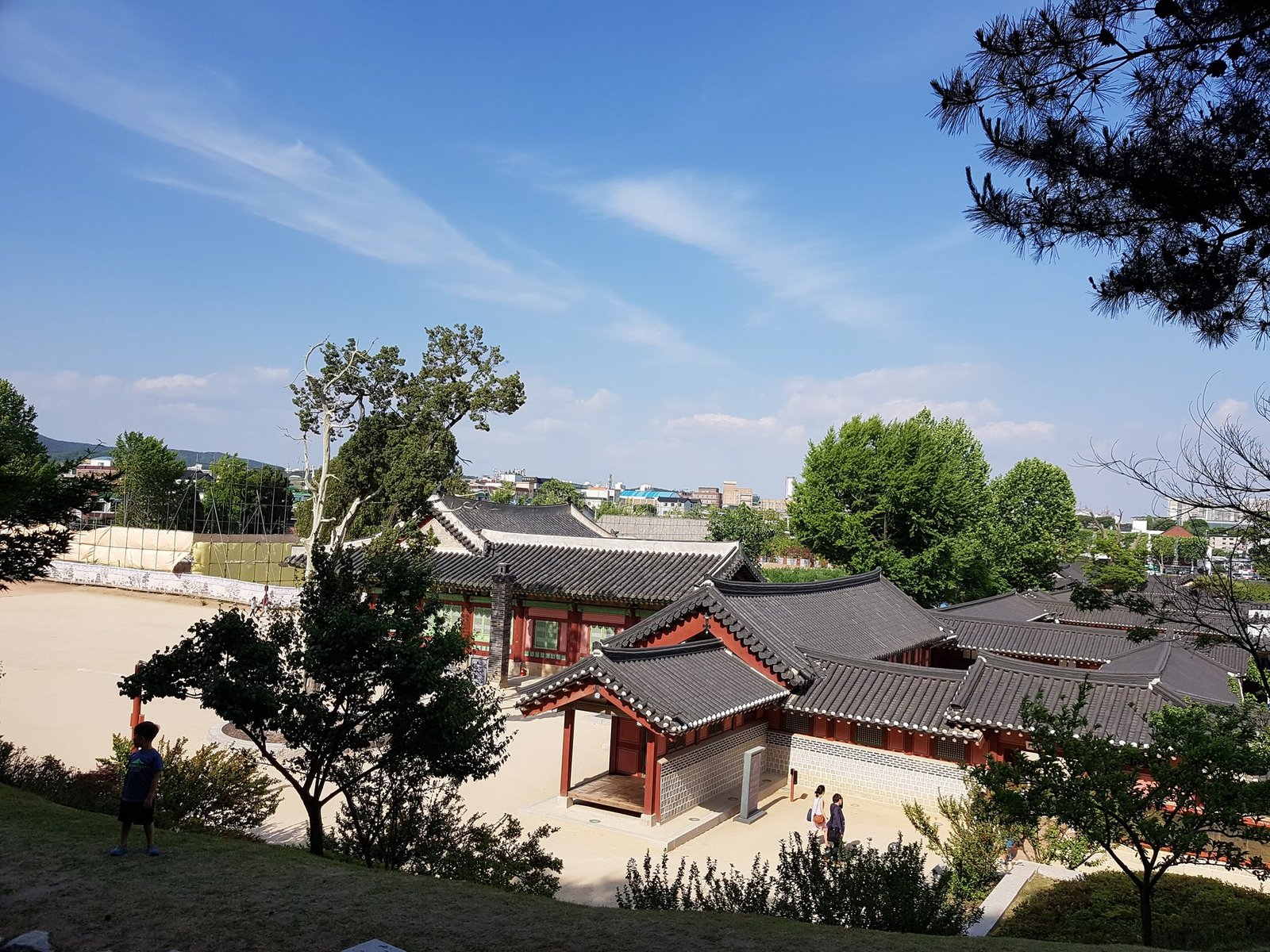
Hwaseong Fortress and Hwaseong Haenggung are different attractions. The fortress walls are free. The palace is a separately ticketed complex inside the old city, with courtyards and restored buildings. Allow 60–90 minutes instead of treating it as a quick entrance photograph.
- Standard palace hours: daily 09:00–18:00
- Entry cutoff: plan to enter before 17:00; current Korean visitor information says admission ends one hour before closing
- Standard adult admission: KRW 2,000, including Hwaryeongjeon
Check the current official visitor information and signs at the ticket office for changes, concessions and any restricted palace areas.
5. Keep the final stop flexible
After the palace, choose a café in Haenggung-dong or a market walk near Paldalmun. Do not add a second distant attraction simply to fill the day. Check your return journey before sitting down, especially if you have a reserved train.
For a reserved departure, allow a 45–60-minute planning buffer from the historic district for the local transfer, station navigation and boarding. Traffic or a missed bus can require more. With Line 1, check the final service that reaches your intended Seoul stop, not only the last train leaving Suwon.
The longer route: a full fortress circuit
If the walk is your main reason for coming, start near Paldalmun and climb the Paldalsan side while your legs are fresh. The sequence below is an orientation guide, not a turn-by-turn navigation map:
Paldalmun → Seojangdae → Hwaseomun → Janganmun → Hwahongmun and Banghwasuryujeong → Changnyongmun → Bongdon → Namsumun → Paldalmun/market area.
The western climb toward Seojangdae is steep and has many steps. The fortress perimeter is about 5.7 km, but detours, approaches and the palace add to your actual walking distance. Around Paldalmun, use road-level pedestrian connections and marked crossings: this is not an uninterrupted elevated-wall loop.
Budget 3–4 hours for the circuit with rests and photographs. If you also want the palace, start earlier and make sure you reach its entrance before 17:00. In heat, ice or heavy rain, choose a shorter section rather than chasing a complete loop. The official walking courses help you choose an exit point.
Rain, steps, toilets and accessibility
- Rain: exposed stone paths and stairs can become slippery. Skip the long wall circuit in steady rain. The palace also involves outdoor walking, so it is not a fully indoor fallback.
- Indoor alternative: Suwon Hwaseong Museum, at 21 Changnyong-daero, opens 09:00–18:00 with ticketing until 17:00; standard adult admission is KRW 2,000. It closes Mondays, or the following day if Monday is a public holiday. Check the museum’s current visitor page.
- Mobility: upper gate passages have steps and thresholds, and some wall ramps are steep. Lower park paths between Janganmun and the Yongyeon area are a better starting point for wheelchair planning. The palace also has mixed surfaces and restricted approaches, so do not assume access to every building.
- Toilets: KTO identifies accessible facilities near Janganmun, Jangan Park, outside Hwaseomun and Dalmaji near Hwahongmun. Its detailed access observations include older survey material; confirm a suitable facility locally if it is essential to your visit.
- Bring: grippy walking shoes, water, weather protection, a charged phone, a transport card and a backup payment method. Carry less luggage than you would on a city shopping day.
For specific access needs, use KTO’s Janganmun-area accessibility guide and confirm the current route with the tourist office. The palace lists a small number of loan wheelchairs and strollers; availability is not guaranteed.
What should you budget?
For an adult using public transport, a useful working allowance is KRW 30,000–50,000 for the day, excluding shopping, breakfast, dinner and any premium activities. This is an editorial budget, not a package price:
- Return transport and local transfers: allow KRW 10,000–18,000, then replace this with your actual subway or train itinerary
- Lunch: allow KRW 12,000–20,000
- Coffee or a snack: allow KRW 5,000–8,000
- Palace: standard adult entry KRW 2,000; fortress walking is free
Those components total KRW 29,000–48,000 before extras. Add a buffer for taxis or the museum, and check current menus and Korail fares. For the wider trip, our Seoul budget guide separates daily spending from hotel nights and airport transfers.
Can you stay for the evening?
The fortress permits night viewing, but palace night opening is a separate seasonal program. For 2026, the operator lists May 1–November 1 on Fridays, Saturdays, Sundays and public holidays, 18:00–21:30, with last entry at 21:00. A normal weekday visit does not automatically include evening palace access.
Check the operator’s night-opening page for the date you will visit and any event or weather changes. Do not reuse the 2026 schedule for a later year. If you stay late, confirm your return transport first and stick to well-lit signed paths.
Save these Korean names before leaving
- Suwon Station: 수원역
- Changnyongmun·Yeonmudae: 창룡문·연무대
- Banghwasuryujeong / Yongyeon: 방화수류정 / 용연
- Hwahongmun / Janganmun: 화홍문 / 장안문
- Hwaseong Haenggung: 화성행궁
- Paldalmun: 팔달문
Bottom line: choose the east/north section and palace for a balanced first visit. Choose the full circuit for a walking-focused day. In either case, plan the transfer from Suwon Station and protect the palace’s entry deadline before adding optional stops.
Sources and checking notes
Checked October 15, 2026 against the following sources. Transport arrival times, train availability, fares for a specific departure, weather and temporary access restrictions must be checked for your own visit.
- VisitSuwon: fortress and palace visitor information
- VisitSuwon: public transport directions
- VisitSuwon: recommended fortress walking courses
- Suwon Cultural Foundation: walking courses and 2026 palace night opening
- Seoul Metropolitan Government: Climate Card coverage
- Korail: current train searches and fares
- KTO: Janganmun-area accessibility and palace accessibility
- Suwon Hwaseong Museum: hours, closure days and admission