Gwangjang Market Seoul Guide: Street Food, History, Starbucks & Olive Young
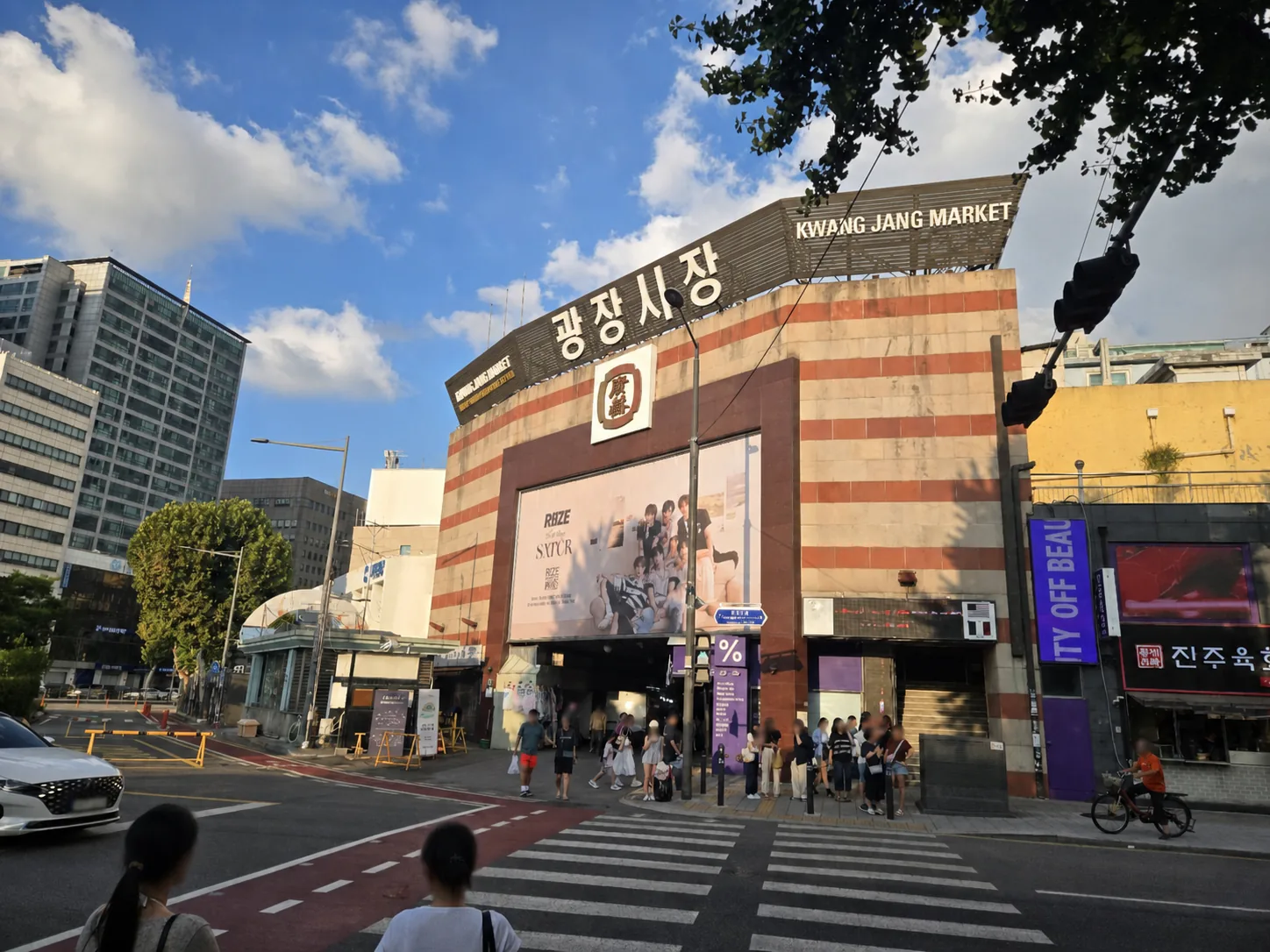
Gwangjang Market Seoul is one of the city’s best-known traditional markets—a place where more than a century of history, crowded street-food counters, fabric shops, vintage fashion, and new lifestyle stores now share the same roof. If you want one stop that feels both unmistakably old Seoul and very current, this is it.
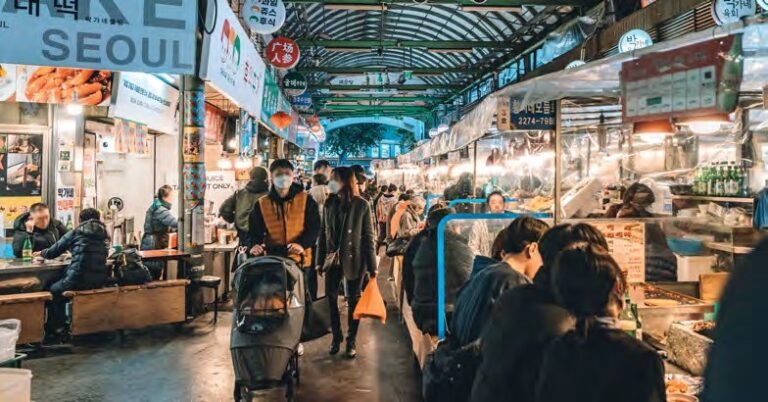
I recently returned to Gwangjang Market after a long break. The familiar sounds and smells were still there: mung bean pancakes sizzling on griddles, steam rising from noodle pots, and diners squeezing onto benches beside strangers. But the market also felt newly energized. Starbucks has opened a large community store here, Olive Young has created a retro K-beauty destination, and fashion flagship spaces have added more reasons to explore beyond the food lanes.
Quick Answer: Is Gwangjang Market Worth Visiting?
Yes—especially for a first trip to Seoul. Visit Gwangjang Market for classic Korean market food, a lively communal dining atmosphere, traditional textiles and hanbok, vintage clothing, and an increasingly interesting mix of modern shops. Allow about 1.5 to 2.5 hours if you plan to eat, browse, and visit one of the newer spaces.
| Quick fact | What to know |
|---|---|
| Address | 88 Changgyeonggung-ro, Jongno-gu, Seoul |
| Nearest subway | Jongno 5-ga Station, Line 1, near Exits 7 and 8 |
| Regular market hours | 09:00–18:00; many regular shops close Sunday |
| Food Alley | Officially listed as 09:00–23:00 daily |
| Vintage clothing market | 10:00–19:00; closed Sunday |
| Recommended visit | Late morning for easier browsing; late afternoon or early evening for atmosphere |
| Time needed | About 1.5–2.5 hours |
Why Gwangjang Market Is So Famous
Gwangjang Market opened in 1905 and is widely recognized as one of Korea’s oldest permanent markets. Long before it became an international food destination, it was an important place to buy fabric, bedding, hanbok materials, and everyday goods. Those traditional businesses still matter: look above and beyond the central food lanes and you will find textiles, wedding goods, hanbok shops, and secondhand clothing.
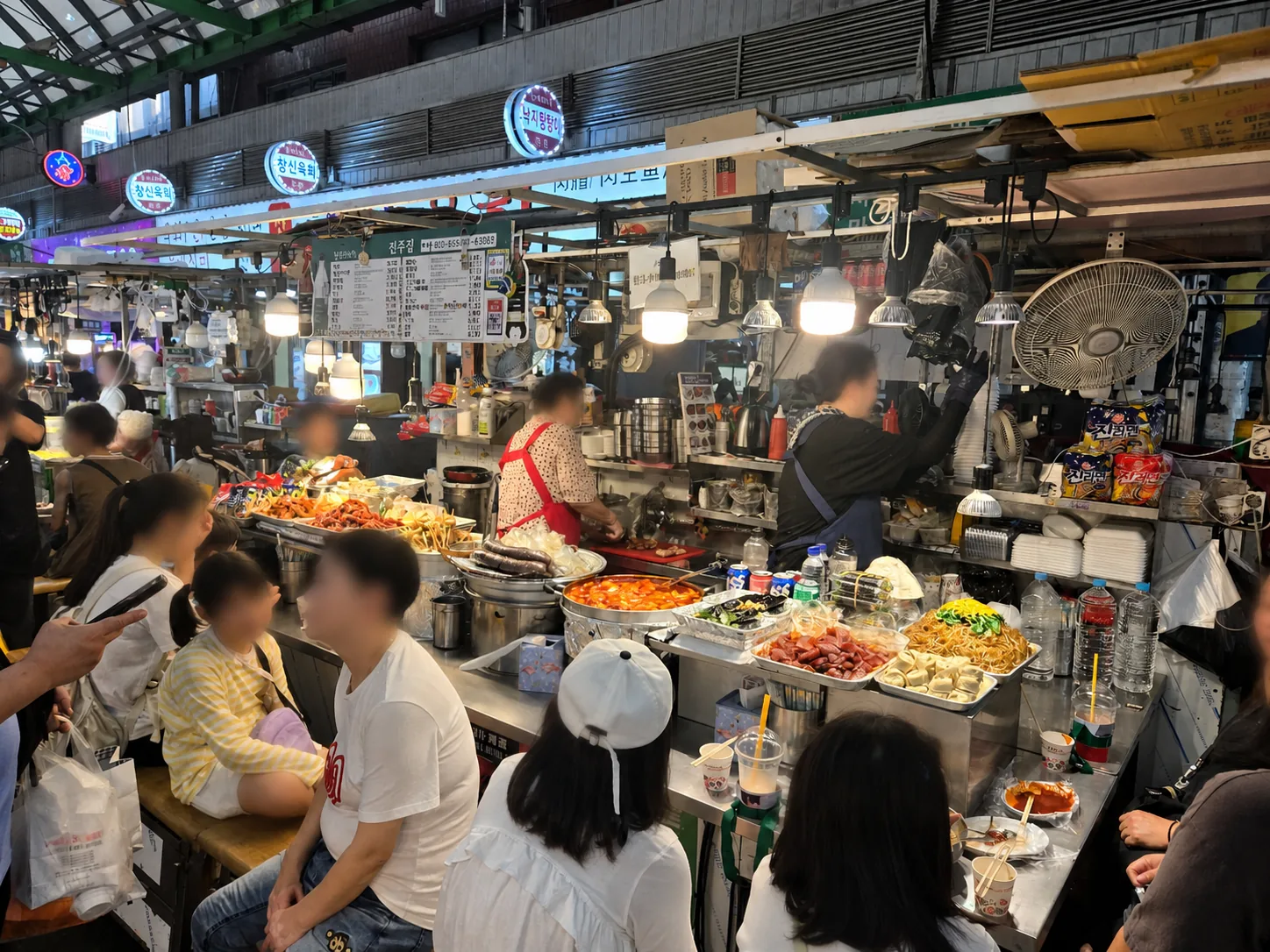
The market’s fame today comes from the way food is served. Many stalls place diners shoulder to shoulder around a small counter. You can watch your meal being fried, sliced, or ladled into a bowl just a few feet away. It is busy and sometimes chaotic, but that shared energy is the experience—not an inconvenience to be edited out.
What to Eat at Gwangjang Market
Bindaetteok: Mung Bean Pancake
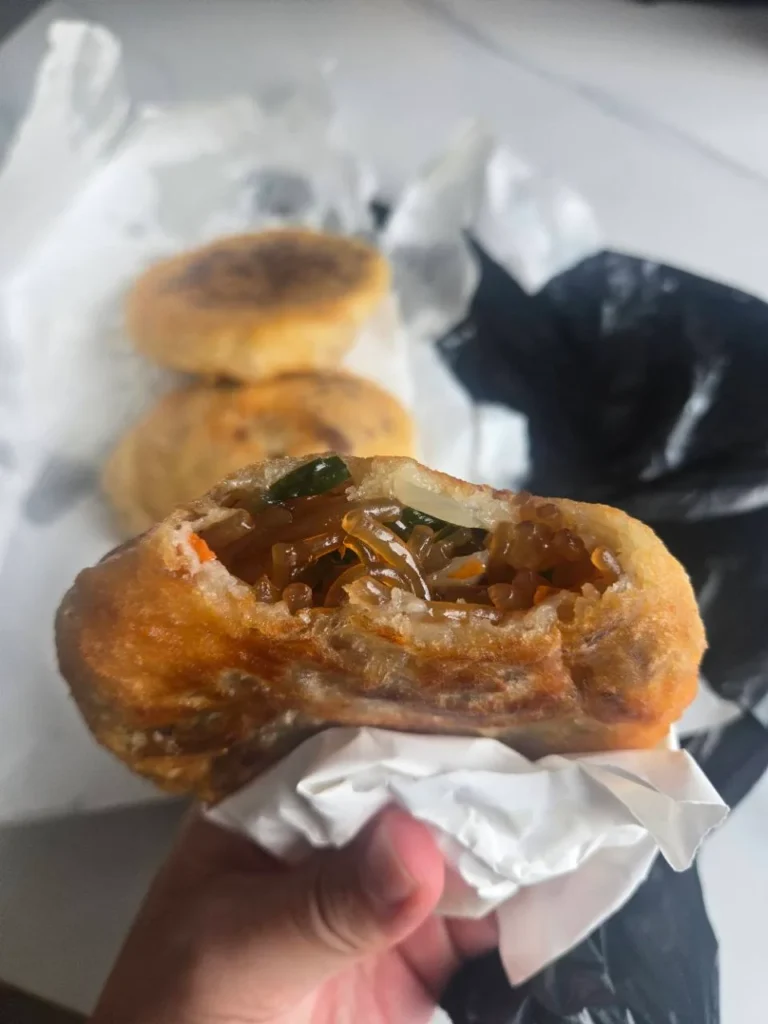
Bindaetteok is the market classic I would choose first. Ground mung beans are fried into a thick, crisp-edged pancake, usually with vegetables and sometimes pork. It is rich, savory, and best shared while hot. Many people pair it with makgeolli, Korea’s lightly sparkling rice wine.
Mayak Gimbap
These small rice rolls are filled simply, often with carrot and pickled radish, and served with a mustard-based dipping sauce. “Mayak” literally refers to how habit-forming the snack can feel; it is a nickname, not an ingredient. The small size makes it useful when you want to sample several foods rather than commit to one large meal.
Yukhoe: Korean Beef Tartare
Gwangjang Market is also famous for yukhoe—seasoned raw beef commonly served with sliced Korean pear and egg yolk. Choose a busy, reputable restaurant and remember that raw meat is not suitable for every traveler. If you are pregnant, immunocompromised, or simply uncomfortable with raw food, there are plenty of cooked alternatives nearby.
Tteokbokki, Eomuk, Sundae, Kalguksu, and Dumplings
For an easy market tasting session, add spicy tteokbokki, fish-cake skewers, Korean blood sausage, hand-cut noodle soup, or dumplings. Do not feel you need to find the single “most famous” stall. A busy counter with clearly displayed food, visible prices, and steady turnover is often the more practical choice.
My Return to Gwangjang Market
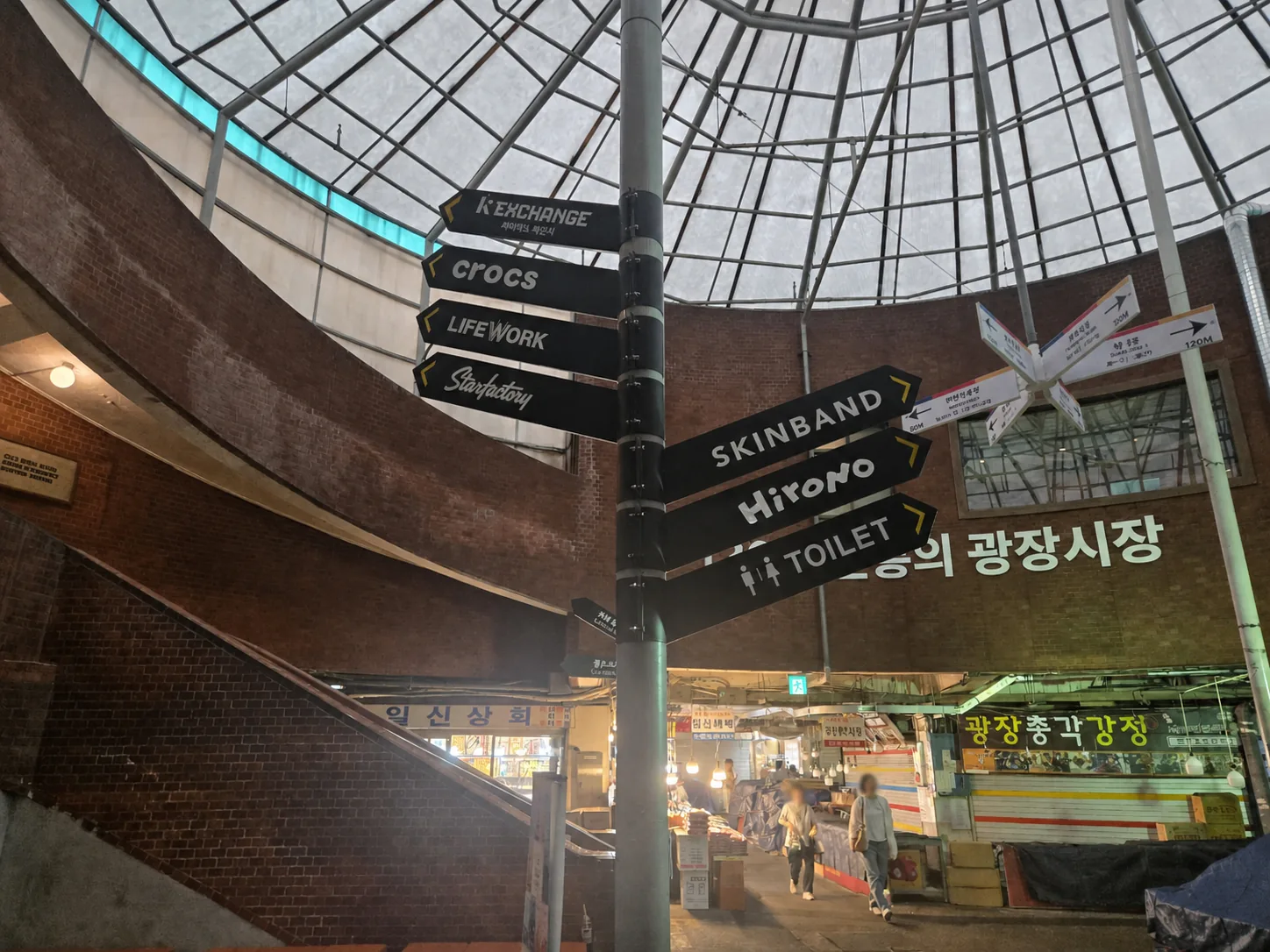
Coming back after a long time reminded me why Gwangjang Market continues to work. It has not become quiet, polished, or perfectly organized—and it should not. The narrow lanes, overlapping signs, hot cooking counters, and constant flow of locals and visitors still create the market’s character.
What surprised me was how naturally some of the newer spaces sit beside the older stalls. The contrast is now part of the visit. You can eat a traditional pancake at a counter, walk upstairs to browse K-beauty, stop for coffee, and then return to a lane selling textiles or vintage clothing. Gwangjang Market feels less like one attraction and more like several eras of Seoul layered together.
The New Starbucks at Gwangjang Market
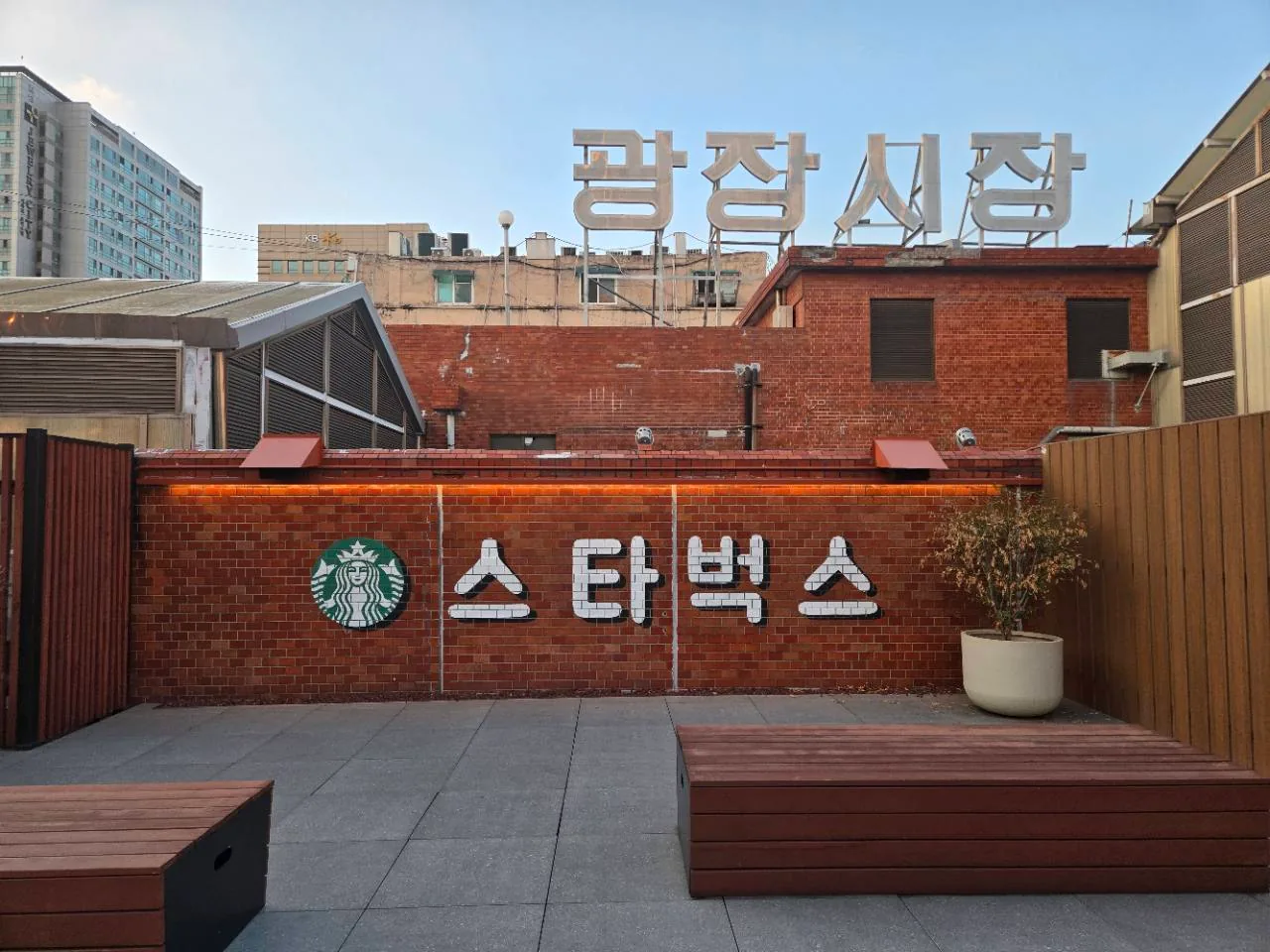
Starbucks Gwangjang Market opened on May 29, 2025 as the company’s 10th Community Store in Korea. It occupies three levels, including a rooftop, and was designed as a modern space that still responds to the market’s history. Starbucks says a portion of sales—KRW 300 per item—is set aside for a fund supporting cooperation with the local market community.
This is useful even if Starbucks is not normally on your Seoul list. After walking through a crowded market, the café gives you a comfortable place to rest, organize your photos, or wait for the heat or rain to pass. The rooftop’s view toward the old Gwangjang Market sign is the most distinctive part of the space.
Olive Young’s Retro K-Beauty Store
Olive Young Gwangjang Market opened on April 30, 2026 on the second floor of the market’s textile section. The 806-square-meter store uses the name and concept “Ol-Young-Yanghaeng,” reimagining a Korean shop from the 1960s with a K-beauty focus.
It is more experiential than a standard branch. The official store concept includes displays organized around natural ingredients, retro photo areas, traditional clothing and accessories for photos, and beauty-care experiences such as skin, scalp, and personal-color checks. Some services support English, Chinese, and Japanese, although availability can change.
The important point is not simply that a major chain moved into an old market. The store uses traditional fabric and retro design to connect K-beauty with the surrounding hanbok and textile businesses. For an international visitor, it creates an unusually efficient combination: Korean street food, traditional-market culture, and K-beauty shopping in one stop.
A Simple Gwangjang Market Route
- Arrive at Jongno 5-ga Station. Use Line 1 and follow signs toward Exits 7 or 8.
- Walk the food lanes before choosing a stall. Look at menus, seating, and food turnover instead of stopping at the first queue.
- Share two or three dishes. Bindaetteok plus mayak gimbap is an easy starting combination; add noodles, dumplings, or yukhoe according to your group.
- Explore beyond the central aisle. Browse textiles, hanbok, and the vintage-clothing area so your visit is more than a meal.
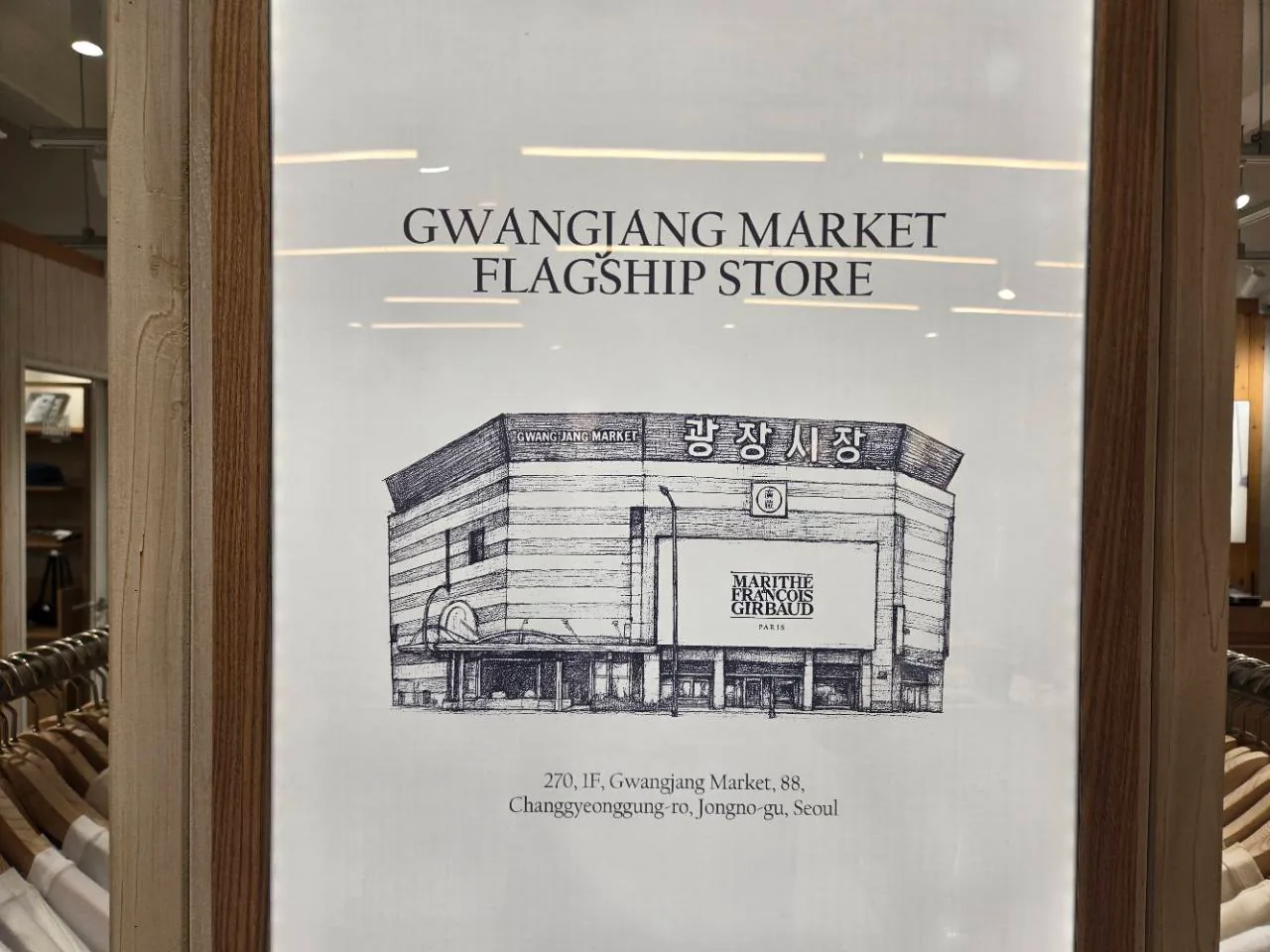
- Visit Olive Young or another new flagship space. This is where the market’s current transformation is easiest to see.
- Finish at Starbucks or continue toward Jongmyo and Cheonggyecheon. Both are easy additions to a Jongno walking day.
Practical Tips Before You Go
- Bring a backup payment method. Card acceptance has improved, but small stalls can differ. Carrying some Korean won is still sensible.
- Check the displayed price before ordering. Prices and serving sizes vary by stall.
- Avoid peak meal times if crowds bother you. Late morning generally gives you more room; lunch, dinner, weekends, and holidays are busier.
- Order a little at a time. Market portions can become filling quickly, especially pancakes and fried food.
- Expect different hours inside one market. Food stalls, fabric stores, vintage shops, Starbucks, and Olive Young operate on separate schedules.
- Be considerate with photos. Photograph the market, but avoid blocking narrow aisles or taking close portraits of vendors and diners without permission.
Uncle Choi’s Tip: Do not treat Gwangjang Market as a checklist of viral foods. Walk one full loop first, notice which counter feels comfortable, and then sit down. The best memory is often the conversation, the sound of the griddle, and the person next to you recommending what to order.
Frequently Asked Questions
What food is Gwangjang Market famous for?
The best-known foods include bindaetteok, mayak gimbap, yukhoe, tteokbokki, sundae, kalguksu, dumplings, and assorted jeon. First-time visitors can start with a mung bean pancake and small gimbap rolls, then add another dish to share.
What time should I visit Gwangjang Market?
Late morning is best for easier walking and browsing. Late afternoon and early evening feel livelier and suit visitors focused on food. Individual stalls may open or close at different times.
Is Gwangjang Market open on Sunday?
The official Seoul guide lists the Food Alley as open daily, while many regular market shops and the vintage-clothing area close on Sunday. Confirm a specific shop if it is the main reason for your visit.
Are Starbucks and Olive Young inside Gwangjang Market?
Yes. Starbucks Gwangjang Market opened in 2025, and Olive Young Gwangjang Market opened in 2026 on the second floor of the textile section. Both are integrated into the market complex rather than being unrelated stops elsewhere in Jongno.
How long do I need at Gwangjang Market?
Plan 1.5 to 2.5 hours for food, browsing, and one modern store. A quick snack visit can take under an hour, while vintage shopping or a relaxed café break can extend the visit.
Final Recommendation
Gwangjang Market remains one of the easiest places to feel Seoul’s food culture and trading history in the same visit. The new Starbucks, Olive Young, and fashion spaces do not replace the old market; they make its contrast more visible. Come hungry, walk beyond the first food aisle, and give yourself time to enjoy both versions of Gwangjang—the traditional market that has survived for more than a century and the evolving destination it is becoming now.
Still deciding which Seoul market fits your trip? Read our Gwangjang, Mangwon, and Namdaemun market comparison.
Sources & Last Updated
- The Official Travel Guide to Seoul: Gwangjang Market
- Seoul Metropolitan Government, 2026 Seoul Tourist Guide, pp. 30–31 and 66–67
- Shinsegae Group Newsroom: Starbucks Gwangjang Market Community Store
- CJ Olive Young: Gwangjang Market Store Opening
Last fact-checked: August 25, 2026. Store hours, services, and holiday closures can change.