Best Cafe Neighborhoods in Seoul: Seongsu, Ikseon-dong, and Yeonnam
The best cafe areas in Seoul serve different trips: choose Seongsu for industrial design, pop-ups, and destination cafés; Ikseon-dong for compact hanok alleys and a romantic atmosphere; or Yeonnam for a relaxed park walk, small cafés, and easy access from Hongdae.
If you have only one free afternoon, choose by neighborhood experience rather than by one viral drink. Café menus and tenants change quickly, but the character of each area is more stable.
Best Cafe Areas in Seoul: Quick Comparison
| Area | Best for | Atmosphere | Time to allow | Easy pairing |
|---|---|---|---|---|
| Seongsu | Design, pop-ups, large cafés | Industrial and trend-driven | 3–5 hours | Seoul Forest |
| Ikseon-dong | Hanok cafés, dates, photos | Compact and romantic | 2–3 hours | Jongmyo, Insadong |
| Yeonnam | Slow walks, brunch, small shops | Leafy and neighborhood-focused | 3–4 hours | Hongdae, Mangwon |
On mobile, swipe left or right to view the full comparison table.
Seongsu: Best for Design, Pop-Ups, and Industrial Spaces
Seongsu grew from an industrial district known for factories and handmade shoes into one of Seoul’s most visible trend neighborhoods. Official Seoul tourism material describes Yeonmujang-gil as an area where former shoe factories and workshops now share the streets with cafés, galleries, boutiques, and brand pop-ups.
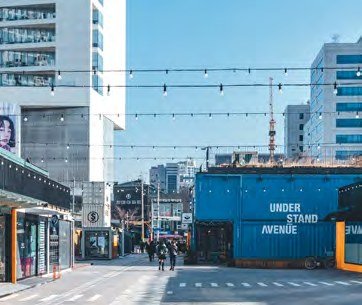
The appeal is not a single café. Walk the side streets between Seongsu Station, Yeonmujang-gil, and Seoul Forest to see old brick buildings, loading doors, new retail interiors, and temporary installations. Under Stand Avenue near Seoul Forest adds a container-style cultural and commercial space to the route.
Two cafés to save in Seongsu
Onion Seongsu, 8 Achasan-ro 9-gil, Seongdong-gu: choose this former-factory bakery café for weathered walls, old tiles and industrial details with coffee and bread. It suits a bakery-led stop rather than a full meal. Visit Seoul venue guide.
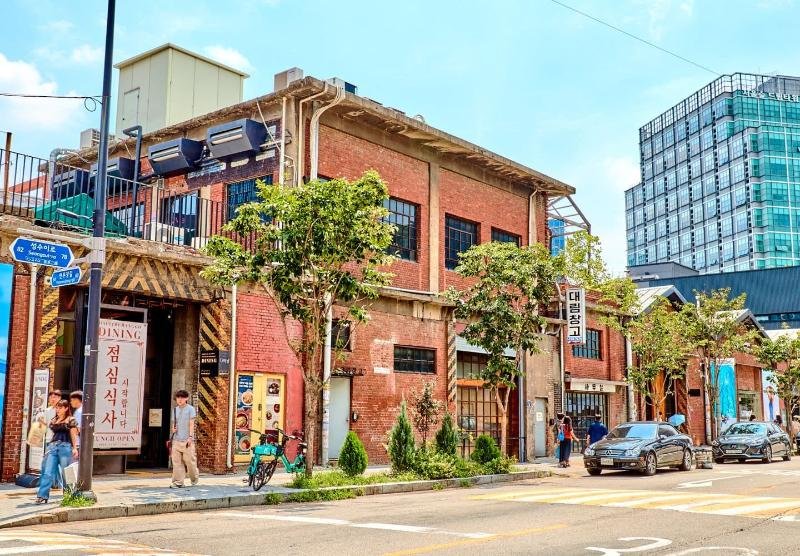
Daelim Warehouse, 78 Seongsui-ro, Seongdong-gu: choose it for a larger warehouse-and-gallery setting in a former rice mill. Brickwork, steel columns and exhibitions make the building part of the visit. Visit Seoul places it 304 meters from Seongsu Station Exit 3. Official information and map.
A practical Seongsu café route
Seongsu Station → Onion Seongsu → Daelim Warehouse → Yeonmujang-gil → optional Seoul Forest. Save both café addresses, but sit down at just one: Onion for bread, Daelim for the warehouse interior. Browse the street shops afterward. Allow around two hours for one café and browsing, or three to five hours with Seoul Forest and a longer neighborhood walk. These are planning allowances, not timed walks.
Pop-ups may require reservations, mobile queues, or identity checks, and many last only days or weeks. Treat them as a bonus unless the event is the main reason for your visit. Save two or three cafés on the map because weekend queues can make the first choice impractical.
Who should choose Seongsu?
- Travelers interested in design, fashion, beauty, or brand culture.
- Groups who want large cafés with dramatic interiors.
- Visitors who enjoy browsing without a fixed attraction list.
- Anyone combining cafés with Seoul Forest.
Choose another area if you want quiet traditional architecture or need a compact route with minimal walking. Seongsu rewards wandering, but the interesting streets cover a wider area than photos suggest.
Ikseon-dong: Best for Hanok Cafés and a Compact Date Route
Ikseon-dong places cafés, restaurants, small shops, and photo spots inside narrow lanes of restored or adapted hanok buildings. It is a compact network of hanok alleys where traditional structures now hold contemporary businesses. The neighborhood dates to the 1920s, giving it a different scale and texture from Seoul’s palace compounds.
The lanes begin close to Jongno 3-ga Station, so Ikseon-dong is easy to add after Jongmyo, Insadong, or a palace morning. The trade-off is crowding: two groups stopping for photographs can block an alley, and popular cafés may have queues that fill the available walkway.
Two cafés to save in Ikseon-dong
Café Highwaist Ikseon, 18 Donhwamun-ro 11da-gil, Jongno-gu: a hanok bakery café for scones, cakes and playful decoration. Visit Seoul lists 09:00–22:00 daily and 119 meters from Jongno 3-ga Exit 6, making it a useful morning choice. Official information and map.
Seoul Coffee Ikseon, 33-3 Supyo-ro 28-gil, Jongno-gu: choose this hanok café for Korean-inspired drinks and desserts. The tourism listing highlights pumpkin sikhye and rice-cake tiramisu; confirm the current menu at the counter. Listed hours are 11:00–22:00, last order 21:40, with access from Jongno 3-ga Exit 4. Official information and map.
A practical Ikseon-dong café route
Jongno 3-ga Exit 6 → Highwaist → hanok alleys around Donhwamun-ro 11da-gil and Supyo-ro 28-gil → Seoul Coffee → Insadong. Treat the cafés as alternatives: Highwaist for an early bakery stop, Seoul Coffee after 11:00 for Korean-inspired flavors. Choose the shorter queue rather than ordering twice. Allow 90 minutes to two hours for one café and the alleys, or two to three hours with Insadong.
Look beyond the façade when choosing. Some hanok cafés preserve visible roof lines, courtyards, or timber details; others use a hanok exterior but a fully modern interior. Neither is automatically better, but the experience is different.
Who should choose Ikseon-dong?
- Couples and first-time visitors who want a short atmospheric route.
- Travelers combining cafés with the historic center.
- People who prefer small spaces and detailed interiors to large warehouses.
- Visitors with limited time who want several options close together.
Ikseon-dong is less suitable for strollers, large luggage, or groups that need wide, quiet seating. The lanes are short but uneven and busy.
Yeonnam: Best for a Slow Café-and-Park Afternoon
Yeonnam feels more residential than Seongsu and more spacious than Ikseon-dong. Its best-known walking spine is the Gyeongui Line Forest Park, a former railway corridor converted into a 6.3-kilometer linear park. The section near Hongik University Station Exit 3 is often called Yeontral Park.
Cafés, brunch restaurants, bakeries, studios, and small shops spread across side streets rather than forming one exact café street. That makes Yeonnam good for travelers who enjoy choosing as they walk, but less efficient for someone chasing a checklist of famous venues.
Two cafés to save in Yeonnam
Antique Coffee Yeonnam, 1F, 25-1 Yeonhui-ro, Mapo-gu: choose it for cream coffee and pastries in a flower-filled, antique-style interior. Visit Seoul highlights Dirty & Cream Coffee and a cream croissant, lists 10:00–22:00 daily and places it 384 meters from Hongik University Exit 3. Official venue information.
Parole & Langue, 8 Seongmisan-ro 29an-gil, Mapo-gu: make this converted-house café the main stop if square pies are your priority. Visit Seoul places it 821 meters from Hongik University Exit 3 and lists 13:00–21:00, closed Mondays. Check its current arrival or reservation procedure before joining the queue. Official information and map.
A practical Yeonnam café route
Hongik University Exit 3 → Gyeongui Line Forest Park → Antique Coffee → Yeonnam side streets → optional Parole & Langue → return toward Hongdae. Antique Coffee is the earlier option; for square pies, plan around Parole & Langue’s afternoon opening and skip it on Monday. Allow two to three hours for walking and one seated stop; three to four hours leaves more time for browsing or a queue.
Yeonnam is strongest from late morning through afternoon. In good weather, alternate indoor café time with the park so the day does not become three similar drinks in a row.
Who should choose Yeonnam?
- Solo travelers who want a comfortable walk between stops.
- Visitors interested in brunch, bakeries, and small independent cafés.
- People already planning Hongdae or Mangwon.
- Travelers who prefer a neighborhood atmosphere to large pop-ups.
Which Seoul Café Neighborhood Fits Your Trip?
- Choose Seongsu for the newest visual trends, changing pop-ups, and converted industrial buildings.
- Choose Ikseon-dong for a short hanok-focused route near the historic center.
- Choose Yeonnam for the slowest pace, park walking, and a natural connection to Hongdae.
- Choose two areas only if they sit on different days; crossing Seoul just for another café usually wastes the afternoon.
For a broader first-trip plan, see our best things to do in Seoul and 3-day Seoul itinerary. Both group café time with nearby attractions instead of treating it as a separate cross-city mission.
Café Etiquette and Practical Tips
- Ordering: many cafés expect one drink per seated guest, especially when busy; follow the posted rule.
- Queues: some venues use a paper list, kiosk, phone number, or messaging app. Ask before leaving the entrance.
- Laptops: check signs about time limits, charging, and laptop-free zones.
- Clearing: return trays and separate cups or waste if a self-service station is provided.
- Photography: avoid photographing other guests closely or blocking the only walkway.
- Peak time: weekend afternoons are the least predictable time for a famous café.
Do not assume every café opens early. Many neighborhood cafés begin later than breakfast restaurants, while closing days vary by owner. Check the business’s current map listing or social account on the day you visit.
What to Order Beyond Coffee
Modern Seoul cafés may specialize in bread, layered cakes, salt bread, traditional ingredients, tea, or seasonal fruit desserts. Choose one signature item to share rather than ordering a full dessert at every stop. If you want a wider food plan, use our Seoul food guide and Korean convenience-store food guide.
Uncle Choi’s Tip
Save one famous café, one backup within a ten-minute walk, and one neighborhood attraction. If the first queue is long, use the backup immediately. The best café afternoon is usually the one with enough walking and food variety to keep coffee from becoming the entire itinerary.
Frequently Asked Questions
Which area has the best cafés in Seoul?
Seongsu is the best all-around choice for current trends and dramatic spaces. Ikseon-dong is better for hanok atmosphere, while Yeonnam is better for a relaxed walk and smaller neighborhood cafés.
Can I visit Seongsu and Ikseon-dong on the same day?
You can, but it creates unnecessary travel for a café-focused day. Pair Seongsu with Seoul Forest and Ikseon-dong with Jongmyo, Insadong, or the palaces on separate days.
Which Seoul café area is best in bad weather?
Ikseon-dong has the shortest distances between venues but narrow exposed alleys. Seongsu offers larger indoor spaces, though they are spread farther apart. Yeonnam is best when the park is pleasant, so heavy rain reduces its advantage.
Are Seoul cafés expensive?
Prices vary widely by neighborhood, size, and concept. A destination café with signature desserts can cost more than a simple local coffee shop. Check the menu before joining a queue and remember that several drinks and desserts can exceed the cost of a meal.
Final Recommendation
Choose Seongsu for trends and design, Ikseon-dong for hanok atmosphere, or Yeonnam for a slow neighborhood walk. Build the day around the area, not a single social-media photo, and keep a nearby backup café ready.
Sources & Last Updated
- Visit Seoul — Yeonmujang-gil, Seongsu
- Visit Seoul — Seongsu-dong Trend Report
- Visit Seoul — Ikseon-dong Hanok Village
- Visit Seoul — Gyeongui Line Forest Park
- Seoul Metropolitan Government / Seoul Tourism Organization, Seoul Tourist Guide, 2025–2026 project edition
Last fact-checked: Venue listings checked against official Seoul tourism sources on October 14, 2026. The named cafés and routes above are researched planning suggestions, not claims of a new firsthand visit. Listed hours, menus and queue procedures can change; confirm directly before visiting.